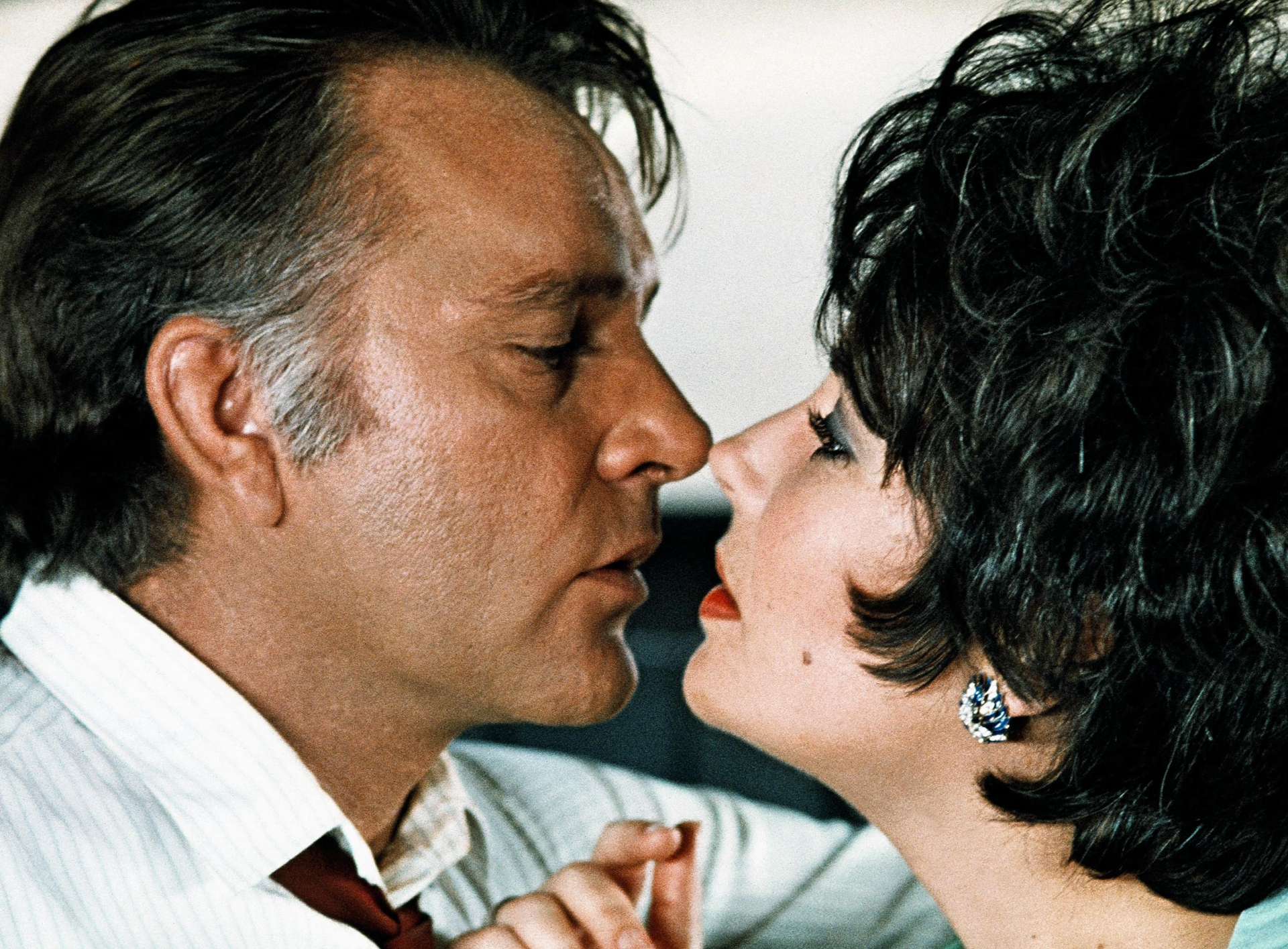
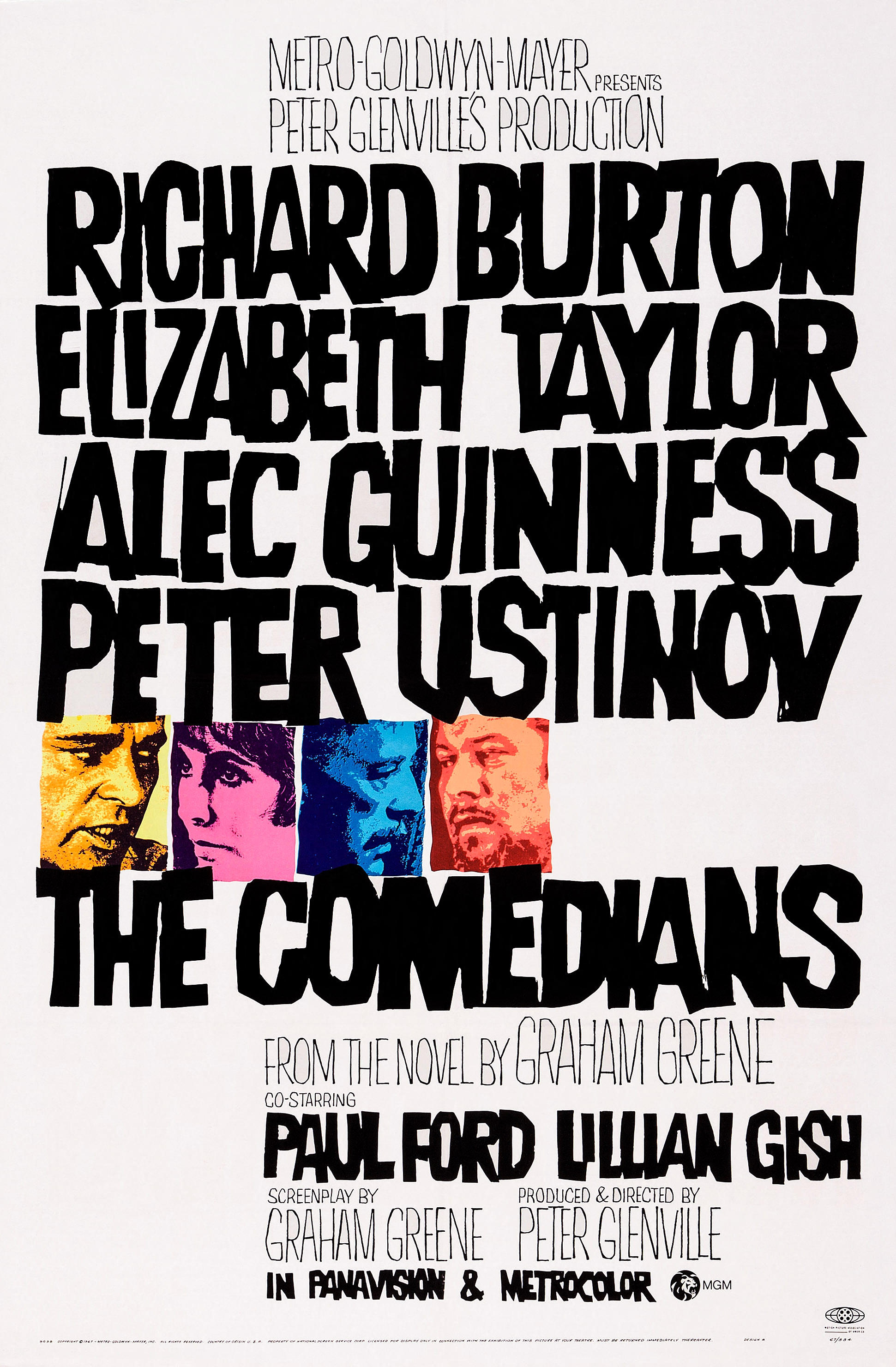
Studio: Metro-Goldwyn-Mayer (MGM)
Running time: 160 minutes
The Comedians (1967)
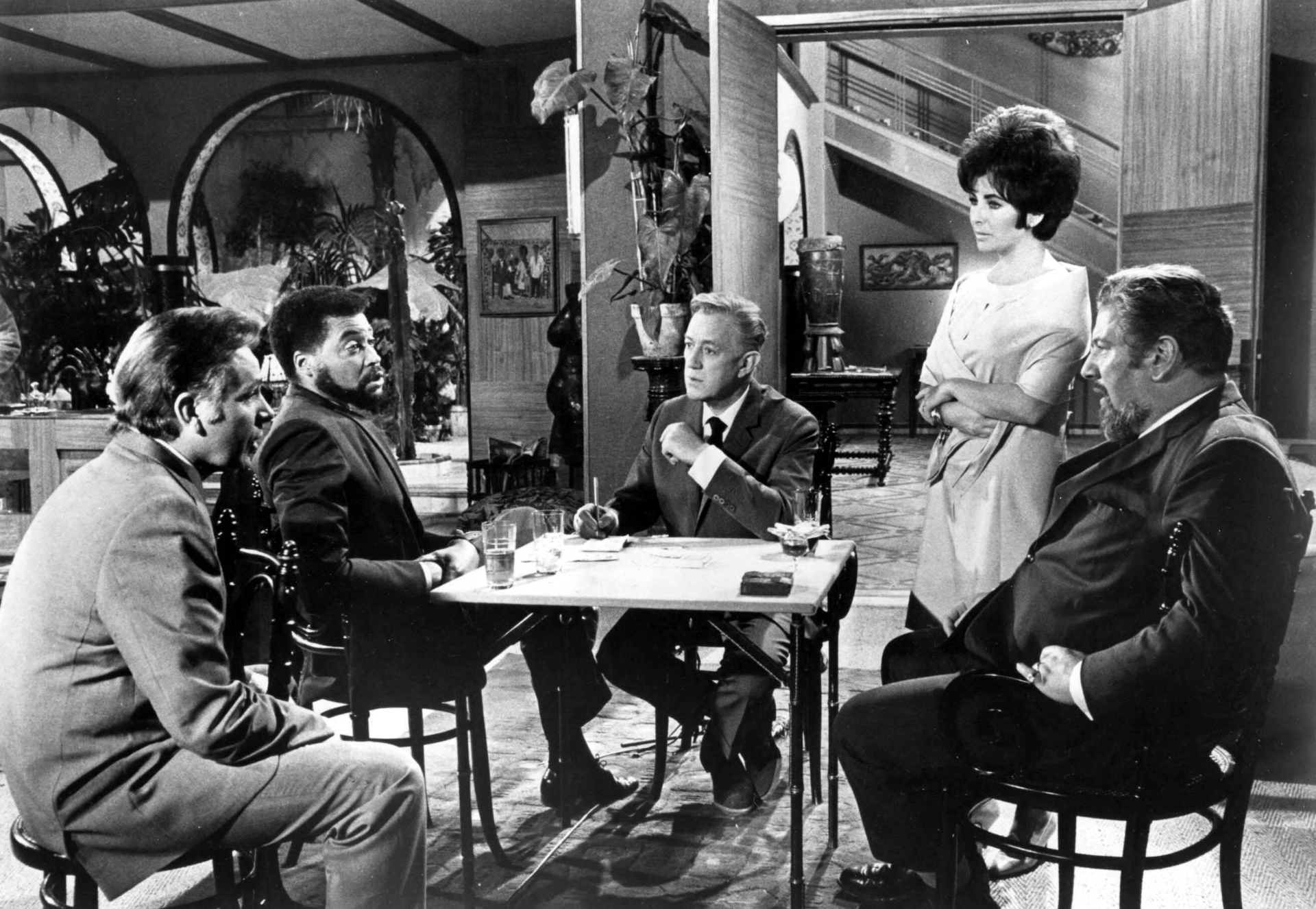
“A poor nation can mean riches for the corrupt. In an absorbing screenplay based on his novel, master of intrigue Graham Greene (The Third Man, The Quiet American) sets passions both romantic and political against the backdrop of Haiti during the brutal rule of Papa Doc Duvalier. Richard Burton and Elizabeth Taylor lead a who’s who cast of stars who portray diplomats, imposters, adulterers, hangers-on, the indolent and even a pair of pacifist vegetarians — all caught up in the strongman’s reign of terror. From the discovery of a dead body at the bottom of a pool to a harrowing showdown with Papa Doc’s ruthless secret police, The Comedians tells a story as disturbing and redeeming as mankind’s conflicted heart.” [From the DVD]
Cast
Brown: Richard Burton
Martha Pineda: Elizabeth Taylor
Jones: Alec Guinness
Ambassador Pineda: Peter Ustinov
Smith: Paul Ford
Mrs. Smith: Lillian Gish
Concasseur: Raymond St. Jacques
Michel: Zaeks Mokae
Petit Pierre: Roscoe Lee Browne
Joseph: Douta Seck
Cesar: Albia Peters
Mrs. Philipot: Gloria Foster
Angelito: Robin Langford
Henry Philipot: Georg Standford Brown
Dr. Magiot: James Earl Jones
Marie-Thérèse: Cicely Tyson
Crew
Director/Producer: Peter Glenville
Screenwriter: Graham Greene, Based on his Novel
Cinematographer: Henri Decae
Art Director: François de Lamothe
Set Decorator: Robert Christides
Musical Score: Laurence Rosenthal
Editor: Françoise Javet
Miss Taylor’s Gowns: Tiziani of Rome
Miss Taylor’s Hairstyles: Alexandre de Paris
Richard was an admirer of Graham Greene, who wrote the screenplay based on his novel of the same name, and agreed to make The Comedians without first reading the script.
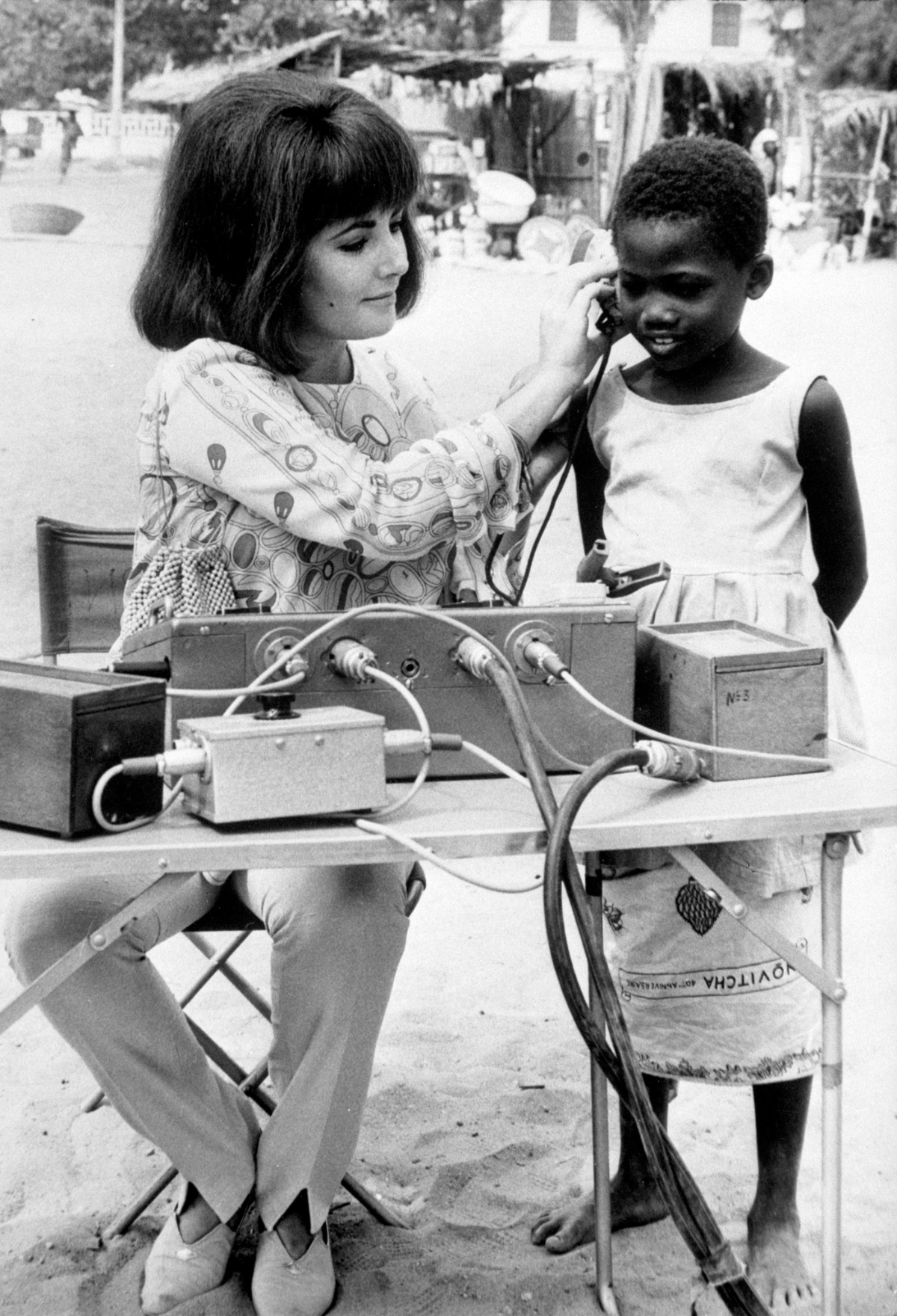
Set “against the backdrop of Haiti during the brutal rule of Papa Doc Duvalier,” The Comedians was, according to its director, Peter Glenville, “the first feature film ever made of a live and extremely controversial political situation.” The company understandably couldn’t film on location in Haiti, so Dahomey, in the region now known as southern Benin, served as its stand-in. Elizabeth’s friend and personal photographer, Gianni Bozzacchi, who “handled [the film’s] ‘special photography,’” later recalled that, while they were in Dahomey, “there were two revolutions in that country, and the president in office was overthrown each time.” Yet, as the legendary Lillian Gish recalled, “The government of Dahomey treated us graciously, housing us in three comfortable cottages that had been built for officials who come to the country for conferences. Fortunately, we had air conditioning in our rooms.”