World Enough and Time (1964)
For the Benefit of the American Musical and Dramatic Academy
Sunday, June 21, 1964
World Enough and Time
A Reading of Prose and Poetry
Cast
Elizabeth Taylor
Richard Burton
Philip Burton
Crew
Introduced and Directed by Philip Burton
Lighting by Ralph Alswang
Miss Taylor’s gowns by Irene Sharaff
About the Production
In 1964, while Richard Burton was treading the boards of the Lunt-Fontanne in his wildly successful Hamlet, his foster father and the man who gave him his name, Philip Burton, asked him for a favour. Philip, who presided over New York’s American Musical and Dramatic Academy (AMDA), wondered whether Richard might give a poetry recital to raise money for the school. Philip recalled that Richard “readily agreed; then, to my great surprise, he added, ‘Why don’t you ask Elizabeth too?’ The idea had never occurred to me but, when I asked her, she said she would, on condition I coached her! I was astonished. She had never performed on a public stage; what courage it would take to do so, especially before the audience we could expect! But what an attraction for an AMDA benefit!”
World Enough and Time, as the benefit would be called, would mark Elizabeth’s legitimate stage debut. Philip would direct and introduce the readings of prose and poetry, which would be held on Sunday, June 21, 1964 at the Lunt-Fontanne, when the theatre would otherwise have been dark. Tickets were priced at $50 and $100 each (more than $500 and $1,000 in 2025 dollars). “Philip has been moderating my life since I was 11,” Richard joked.
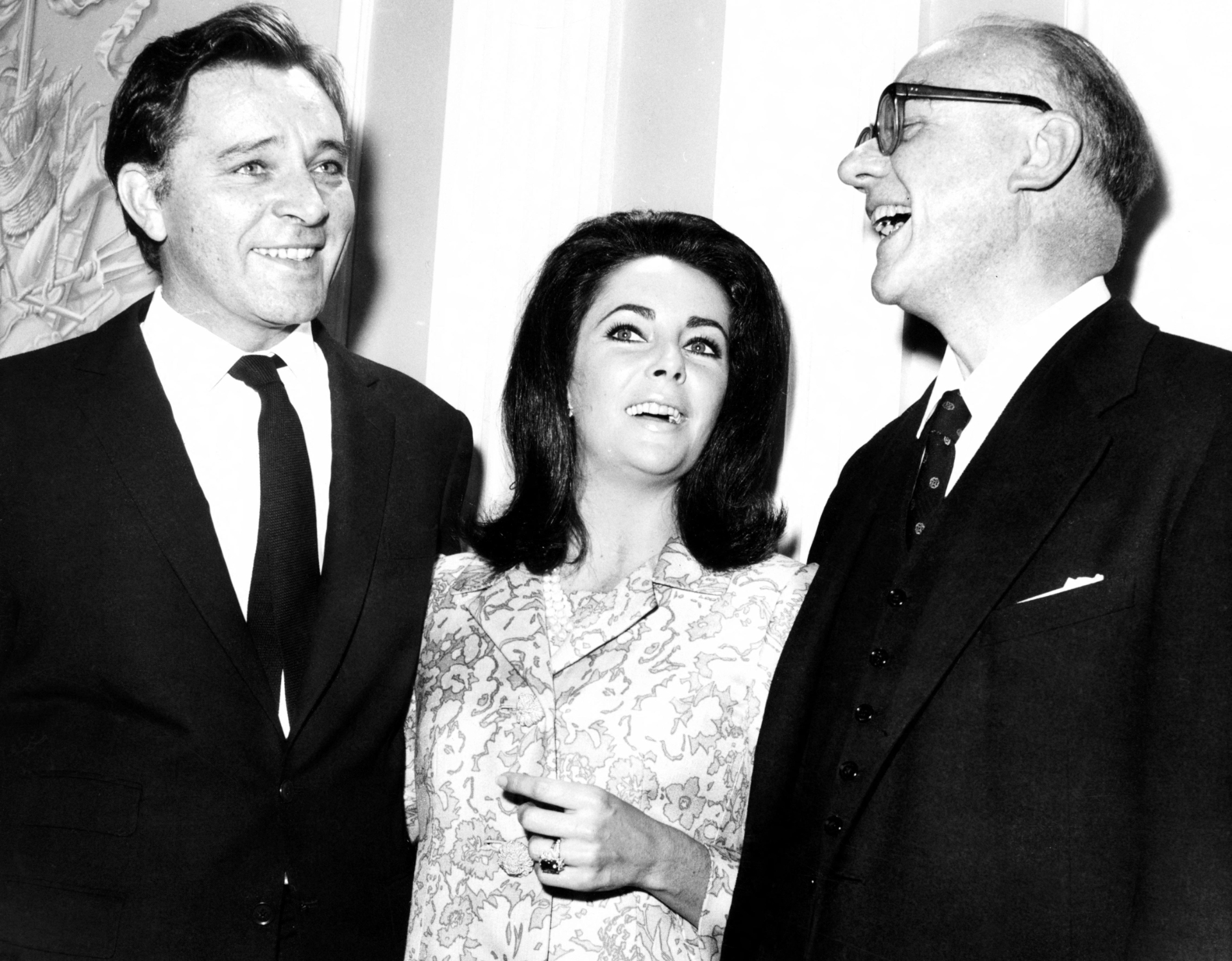
Elizabeth had acquitted herself nicely reciting poetry the year before in Elizabeth Taylor in London. But that was for television, a more forgiving medium that allows for retakes if a performer flubs a line or thinks they can do it better. Performing a recital before a live audience would be a very different sort of challenge. “I didn’t think I had the courage to face a live audience for the first time,” Elizabeth recalled. “I knew that eighty-five percent of them had come there and spent a great deal of money to see me fall flat on my face. Richard couldn’t really face practicing with me till the night before, because I think he thought I would not be able to make it.”
Philip worked closely with Elizabeth for over two weeks before the performance. “I started to work with her in the evenings when Richard was at the theatre. The first problem was her total reliance on a microphone, since film actors have no audience to command by their presence. Now she had to learn to project, even though there would be a microphone, and to speak consciously to a large audience sitting in front of her. I sat as far away as I could when she read”.
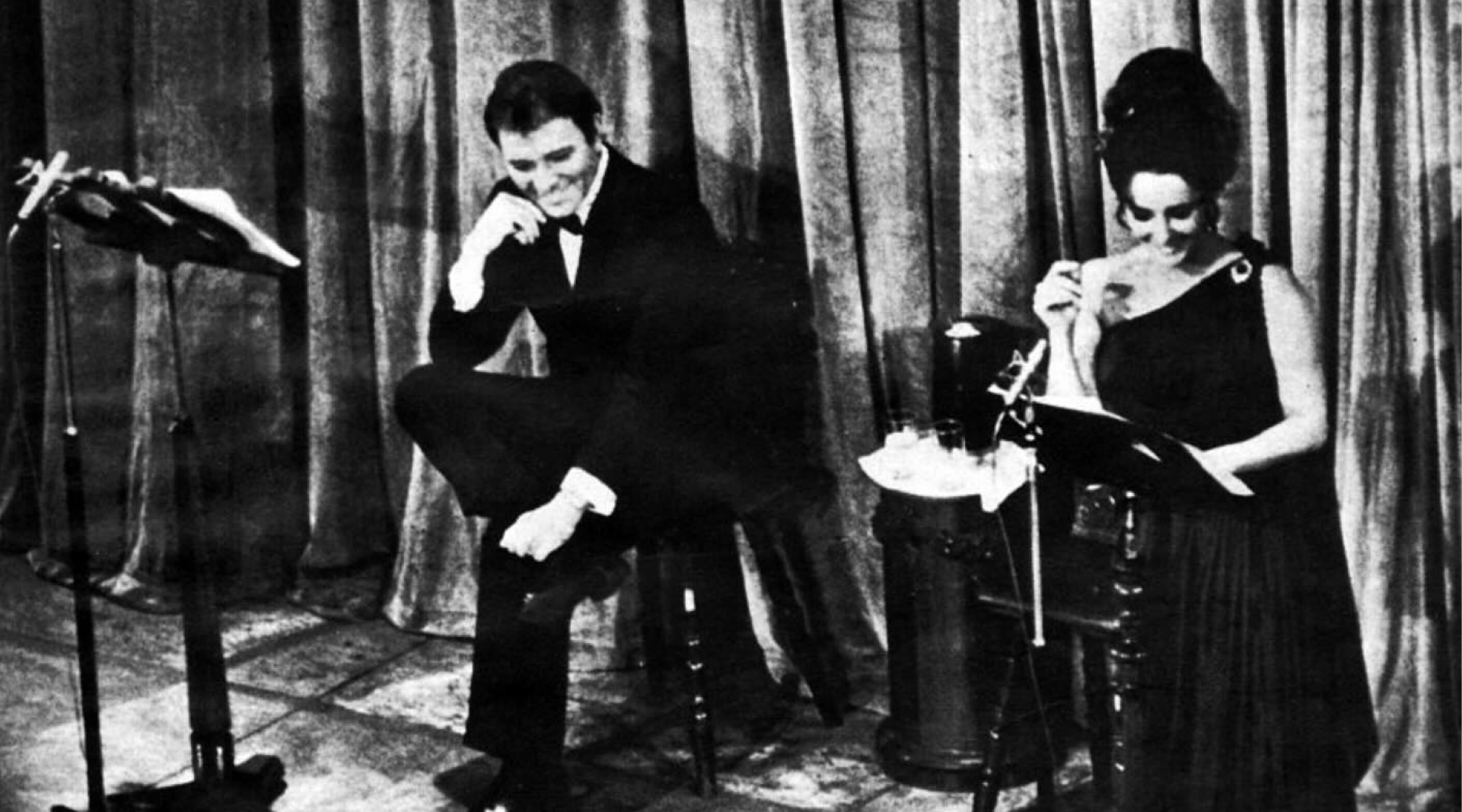
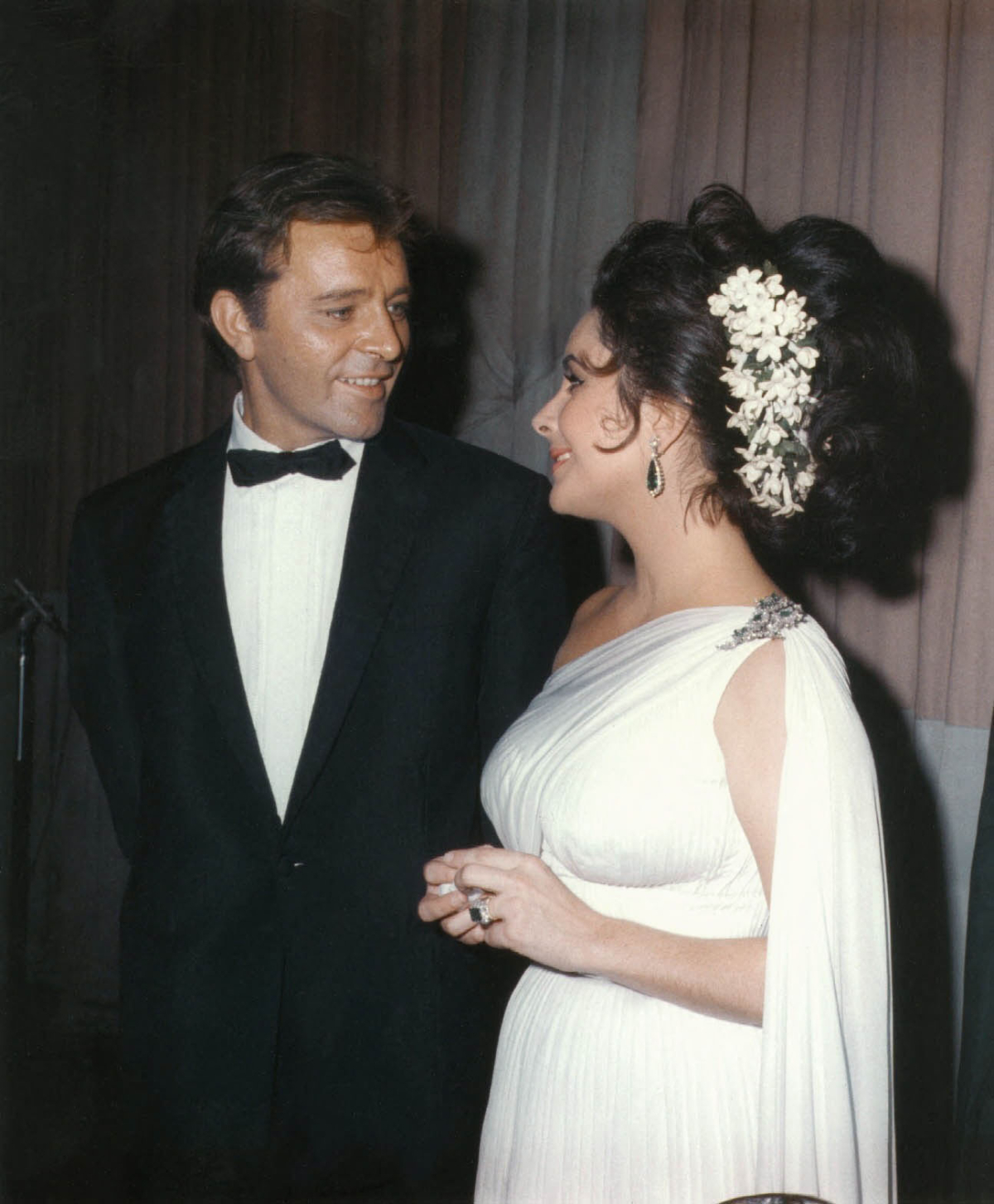
The Burtons cut a glamorous pair on the evening of the performance as they took the stage of the Lunt-Fontanne. Richard, dashing in a tuxedo, and Elizabeth, lovely in a Grecian-inspired gown—one of two she would wear that evening by Irene Sharaff—and glittering in her Bulgari diamonds and emeralds, her hair adorned with early summer flowers. They looked out upon a star-studded audience made up of the great and good from the worlds of theatre, film, and politics. Among them were Lauren Bacall, Dina Merrill, Hume Cronyn, Beatrice Lillie, Lee Remick, Montgomery Clift, Kitty Carlisle Hart, Alan Jay Lerner, Carol Channing, Patricia Kennedy Lawford, Jean Kennedy Smith, Anita Loos, Walter Wanger, Myrna Loy, Adolph Green, Mayor Lindsay, and Eunice Kennedy Shriver. Even Francis and Sara Taylor were on hand for moral support.
Richard recited the first poem of the evening, Andrew Marvell’s “To His Coy Mistress” (the title, World Enough and Time, was borrowed from the poem’s first line). “The first three minutes on stage I was terrified,” Elizabeth later admitted. Her hands, she said, were sweating so profusely that they were leaving marks on her dress. “But I found, after five minutes, that the adrenalin I’d heard about happened inside me. And all of sudden I became terribly daring, audacious, and I lifted my eyes from the page.” The audience was duly impressed. A half an hour into the performance, the actress Beatrice Lillie was overheard saying: “If she doesn’t get bad pretty soon people are going to start leaving”. Even Richard quipped after one of her readings that “I didn’t know she was going to be this good”.
Many of the poems, including Hardy’s “The Ruined Maid,” which Elizabeth read while affecting her best cockney accent, were selected to poke fun at the Burtons’ public image:
And now you’ve gay bracelets and bright feathers three!
“Yes, that’s how we dress when we’re ruined,” said she.
Not to be left out of the fun, Richard, while the two were reciting T. S. Eliot’s “Portrait of a Lady,” spoke the first lines:
Thou hast committed fornication,
but that was in another country…
The Twenty-third Psalm was to open act two, with Elizabeth reciting in English and Richard in Welsh. “After I had introduced it,” Philip explained, “they recited in turn each verse, she in English and he in his beloved Welsh.” Elizabeth, who flubbed the first line, surely endeared herself to the audience with her apology: “Sorry. Let me begin again. I sure screwed that one up.”
“I could say that in Hamlet every night,” said Richard.
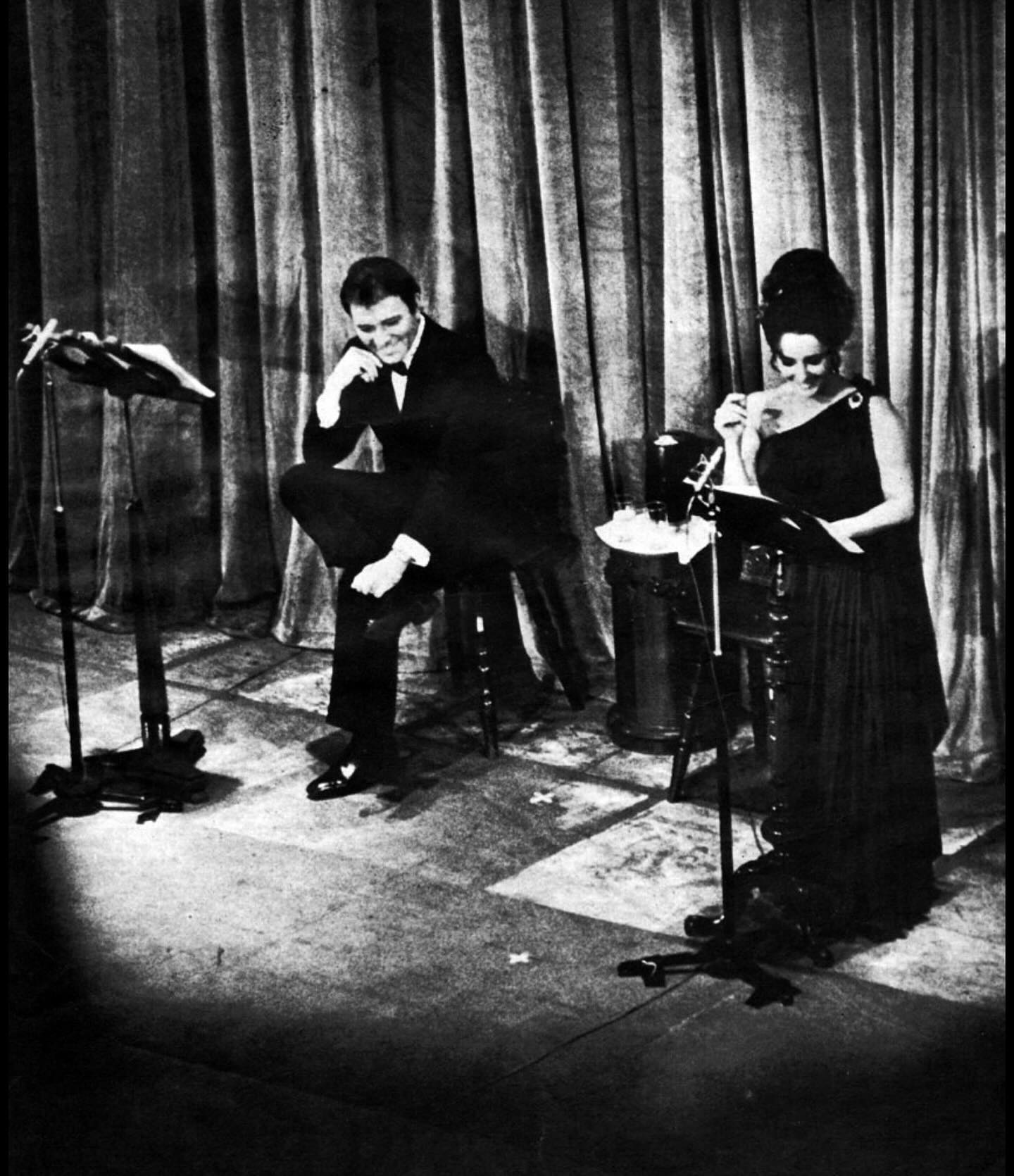
Elizabeth insisted on performing Richard’s favourite poem. Philip recalled that: “I think she knew she would surprise me when I asked her if there was any particular poem she would like to read, because she replied rather defiantly, ‘Yes. “The Leaden Echo and the Golden Echo”.’ I had once described this poem by Gerard Manley Hopkins as the single most difficult poem in the English language to speak, because it depends so much on the sounds of the words and the rhythm of the lines. It was for this very reason that I had worked on it with Richard twenty years before. ... I was reluctant to agree to Elizabeth’s doing it, but gradually she proved to me that she could, and in the performance she brought it off triumphantly. When Richard spoke the lines
“How to keep . . .
“Back beauty, keep it, beauty, beauty, beauty, . . . from vanishing away?
“it was a philosophical question, but with Elizabeth it became a deeply personal one. I had arranged for them to do a few things together, but he didn’t hear her solo items until the actual evening”.
Other recitations included “Snake” by D. H. Lawrence (Richard), Shakespeare’s “death of kings” speech from Richard II and the St. Crispin’s Day speech from Henry V (Richard), “Three Bushes” by William Butler Yeats (Elizabeth), “How do I love thee? Let me count the ways” by Elizabeth Barrett Browning (Elizabeth), and Philip Sydney’s “My True Love Hath My Heart and I Have His” (Elizabeth).
As the recital, which raised $25,000 for AMDA, came to a close, the Burtons’ efforts were rewarded with a standing ovation. Philip later recalled that the audience was “astonished by Elizabeth’s performance. They had expected her to be a limp second in support of Richard, but she stole the show. No one was more surprised and delighted than Richard. Elizabeth had never faced a theatre audience before – and what an audience! – and she had total command of it.”
“I’m not terribly proud of much that I’ve done as an actress,” Elizabeth said, “but I was proud of myself at that poetry reading. It was something I never thought I could do.”