Studio: Paramount
Running time: 122 minutes
A Place in the Sun (1951)
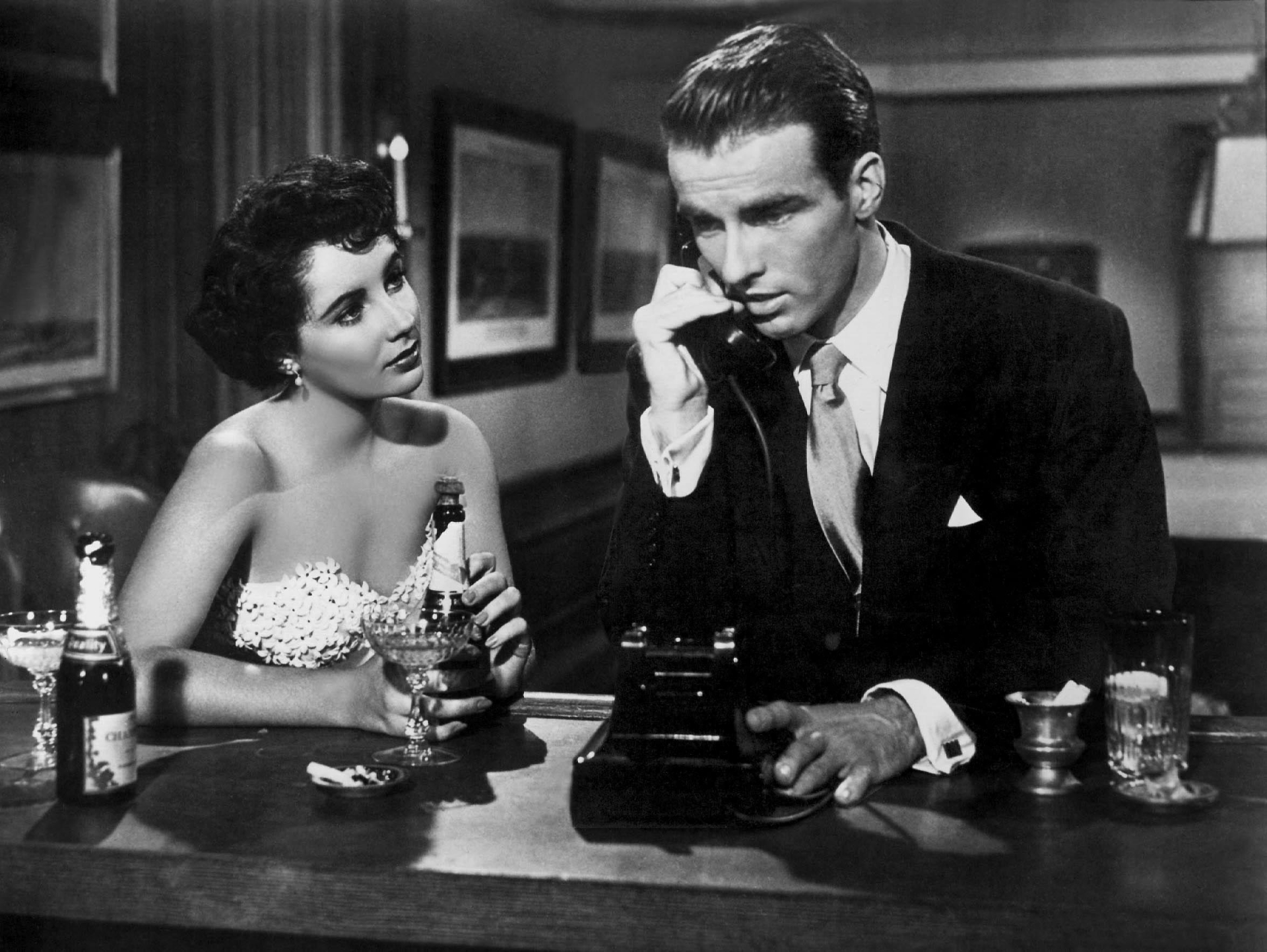
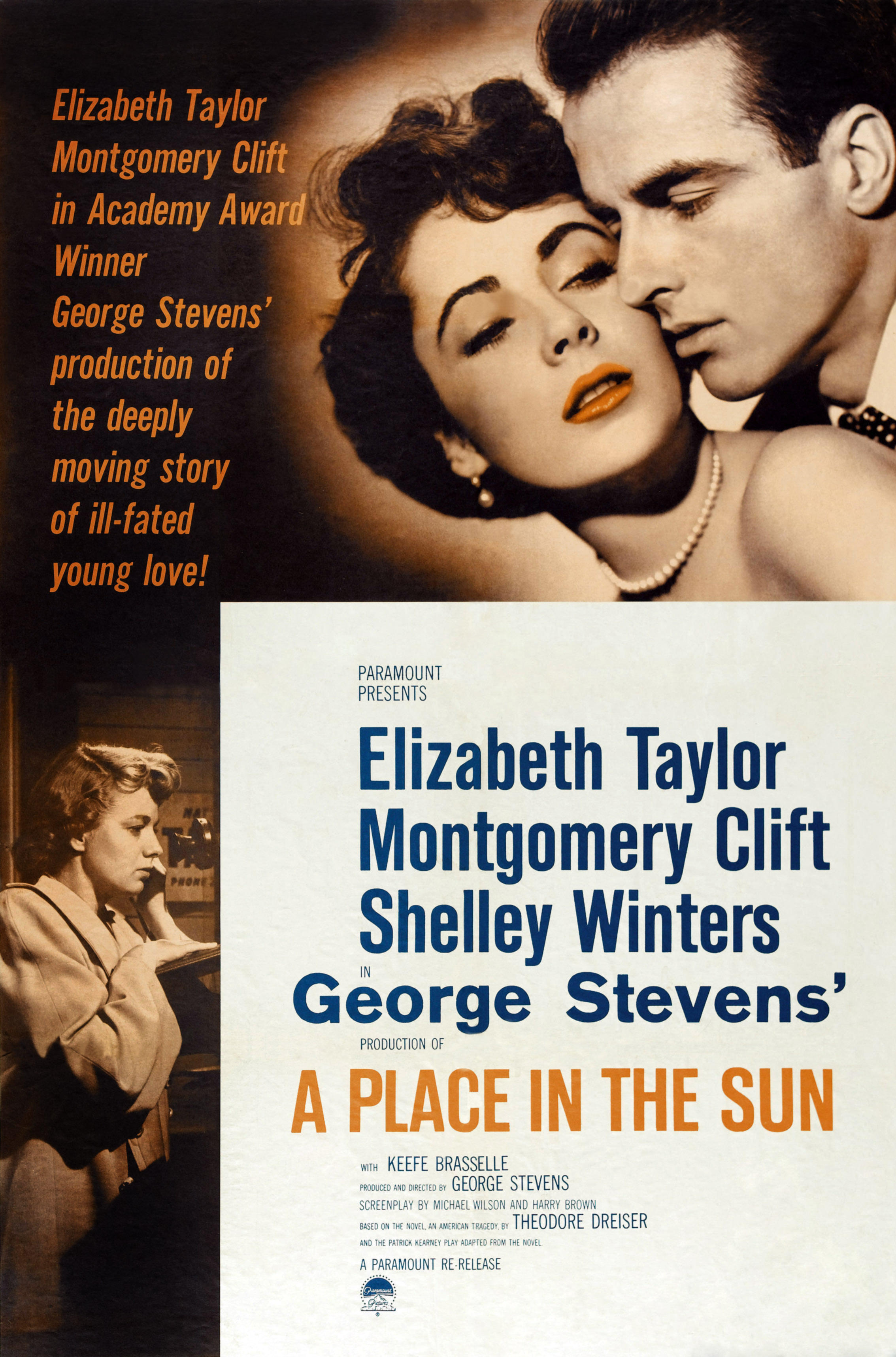
“George Stevens’ stunning adaptation of Theodore Dreiser’s An American Tragedy garnered six Academy Awards (including Best Director and Best Screenplay) and guaranteed immortality for screen lovers Montgomery Clift and Elizabeth Taylor. Clift stars as George Eastman, a poor young man determined to win a place in respectable society and the heart of a beautiful socialite (Elizabeth Taylor). Shelley Winters plays the factory girl whose dark secret threatens Eastman’s professional and romantic prospects. Consumed with fear and desire, Eastman is ultimately driven to a desperate act of passion that unravels his world forever.” [From the DVD]
Cast
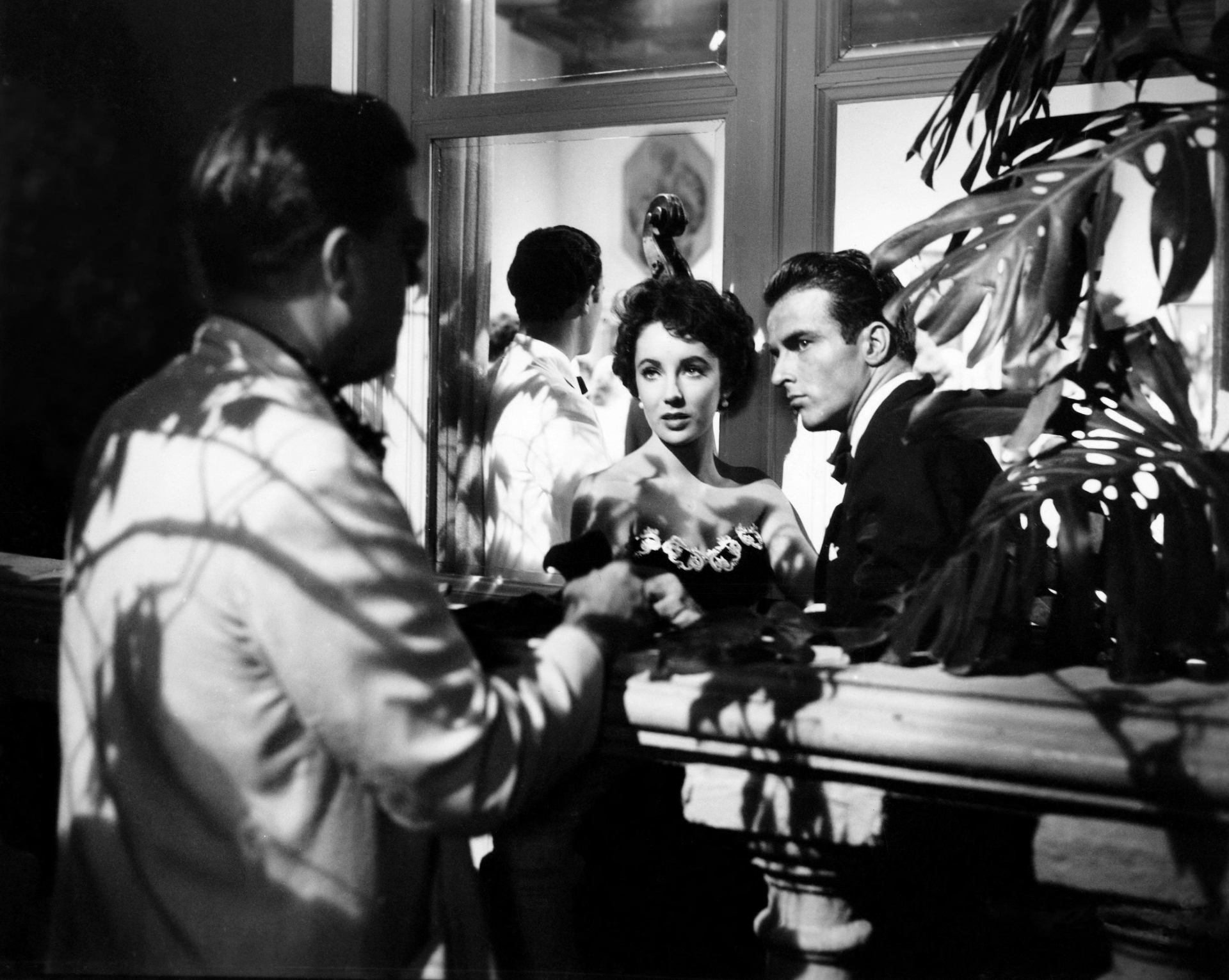
George Eastman: Montgomery Clift
Angela Vickers: Elizabeth Taylor
Alice Tripp: Shelley Winters
Hannah Eastman: Anne Revere
Marlowe: Raymond Burr
Charles Eastman: Herbert Heyes
Earl Eastman: Keefe Brasselle
Anthony Vickers: Shepperd Strudwick
Mrs. Vickers: Frieda Inescort
Dr. Wyeland: Ian Wolfe
Marsha Eastman: Lois Chartrand
Bellows: Fred Clark
Jansen: Walter Sande
Boatkeeper: Douglas Spencer
Coroner: John Ridgely
Mrs. Louise Eastman: Kathryn Givney
Judge: Ted de Corsia
Kelly: Charles Dayton
Reverend Morrison: Paul Frees
Mr. Whiting: William Murphy
Joe Parker: John Reed
Frances Brand: Marilyn Dialon
Secretary to Charles Eastman: Josephine Whittell
Truck Driver: Frank Yaconelli
Policeman: Ralph A. Dunn
Eagle Scout: Bob Anderson
Maid: Lisa Golm
Mrs. Roberts (Landlady): Mary Kent
Warden: Ken Christy
Martha: Kathleen Freeman
Butler at Eastman House: Hans Moebus
Butler: Eric Wilton
Motorcycle Officer: Mike Mahoney
Bailiff: Al Ferguson
Tom Tipton: James W. Horne
Miss Harper: Laura Elliott
Miss Newton: Pearl Miller
Jailer: Major Philip Kieffer
Man: Major Sam Harris
Crew
Director/Producer: George Stevens
Screenwriters: Michael Wilson and Harry Brown
Based on the Novel “An American Tragedy” by: Theodore Dreiser and the stage adaptation of Patrick Kearney
Cinematographer: William C. Mellor
Art Directors: Hans Dreier and Walter Tyler
Musical Score: Franz Waxman
Editor: William Hornbeck
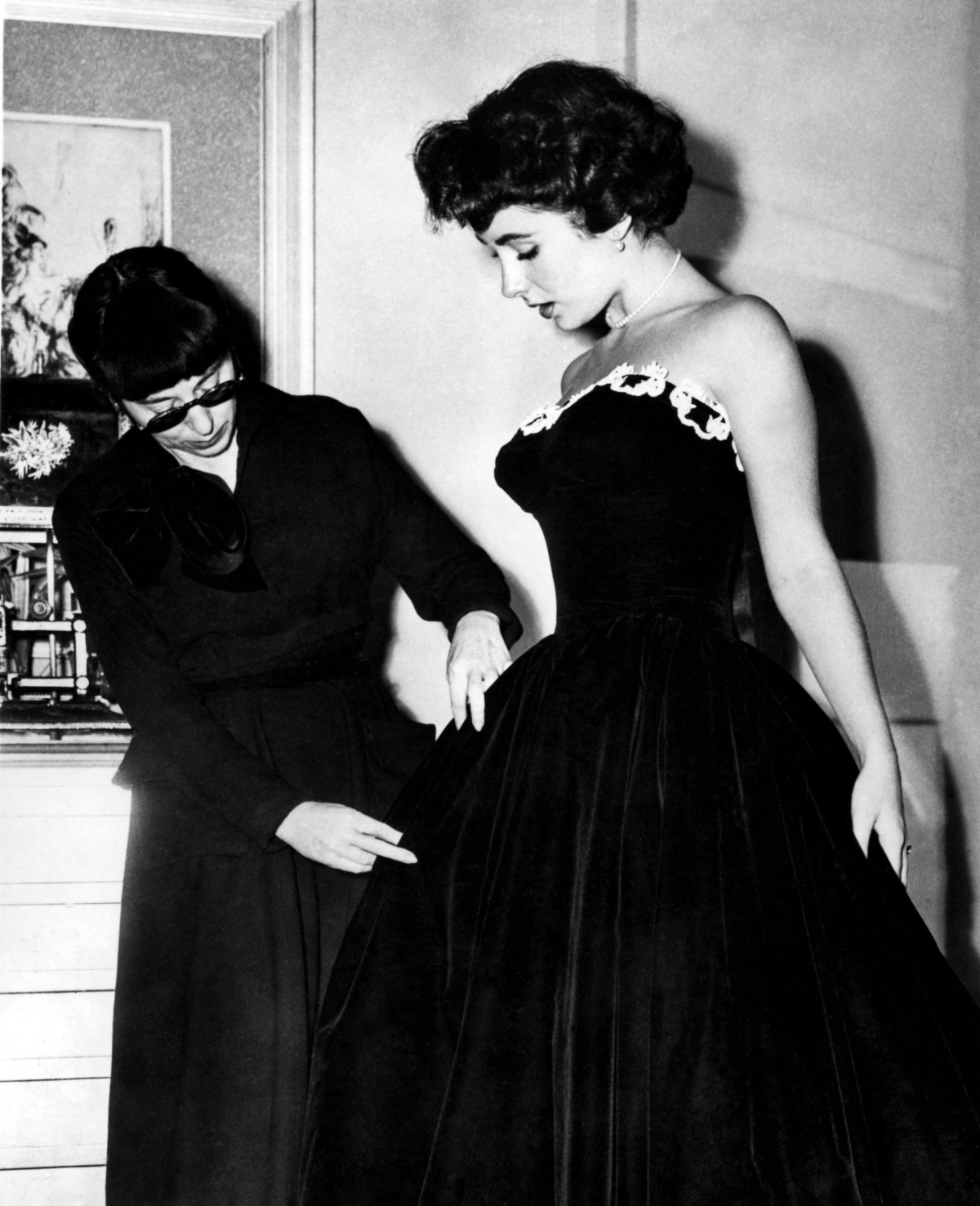
Costumes: Edith Head
Did You Know?
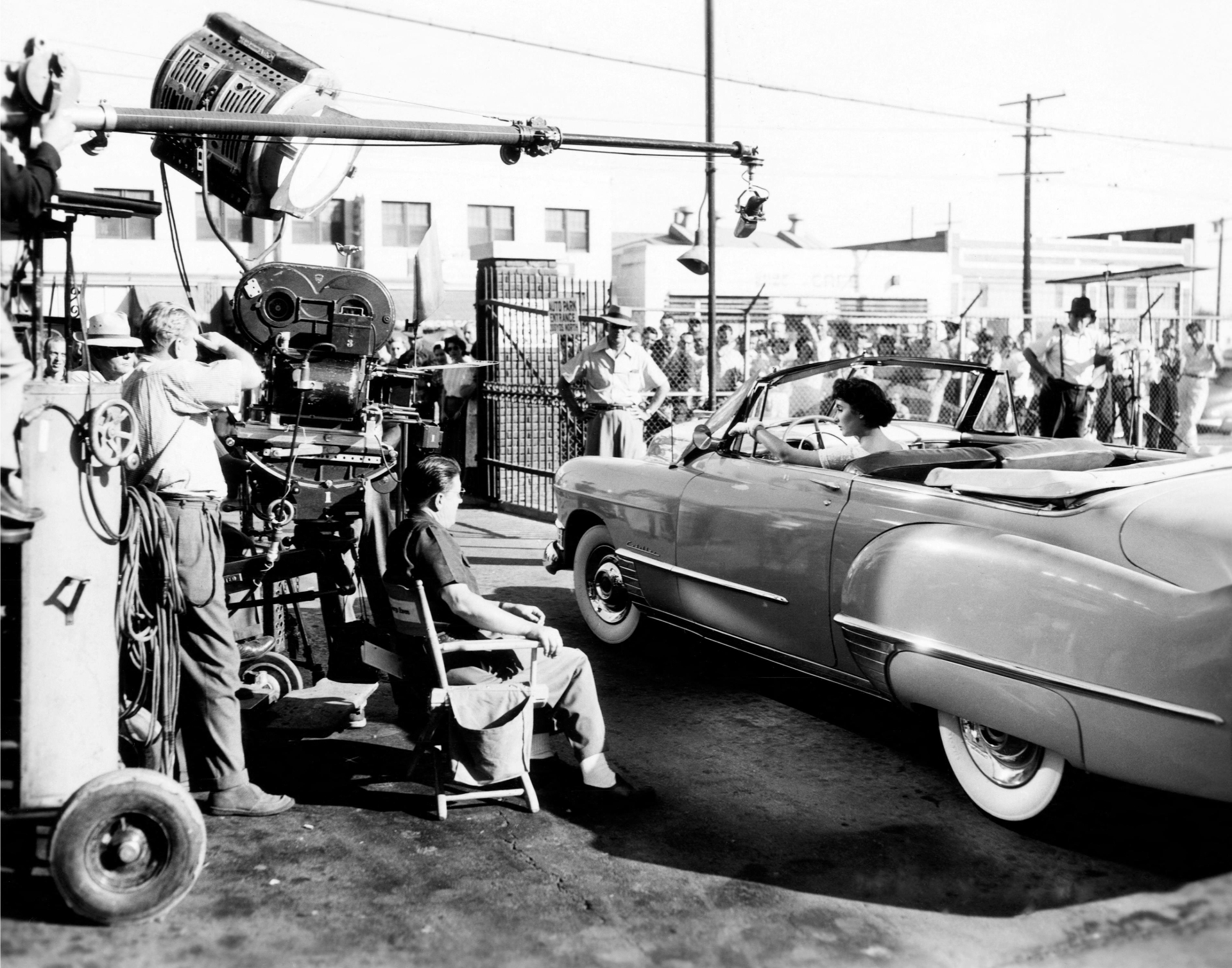
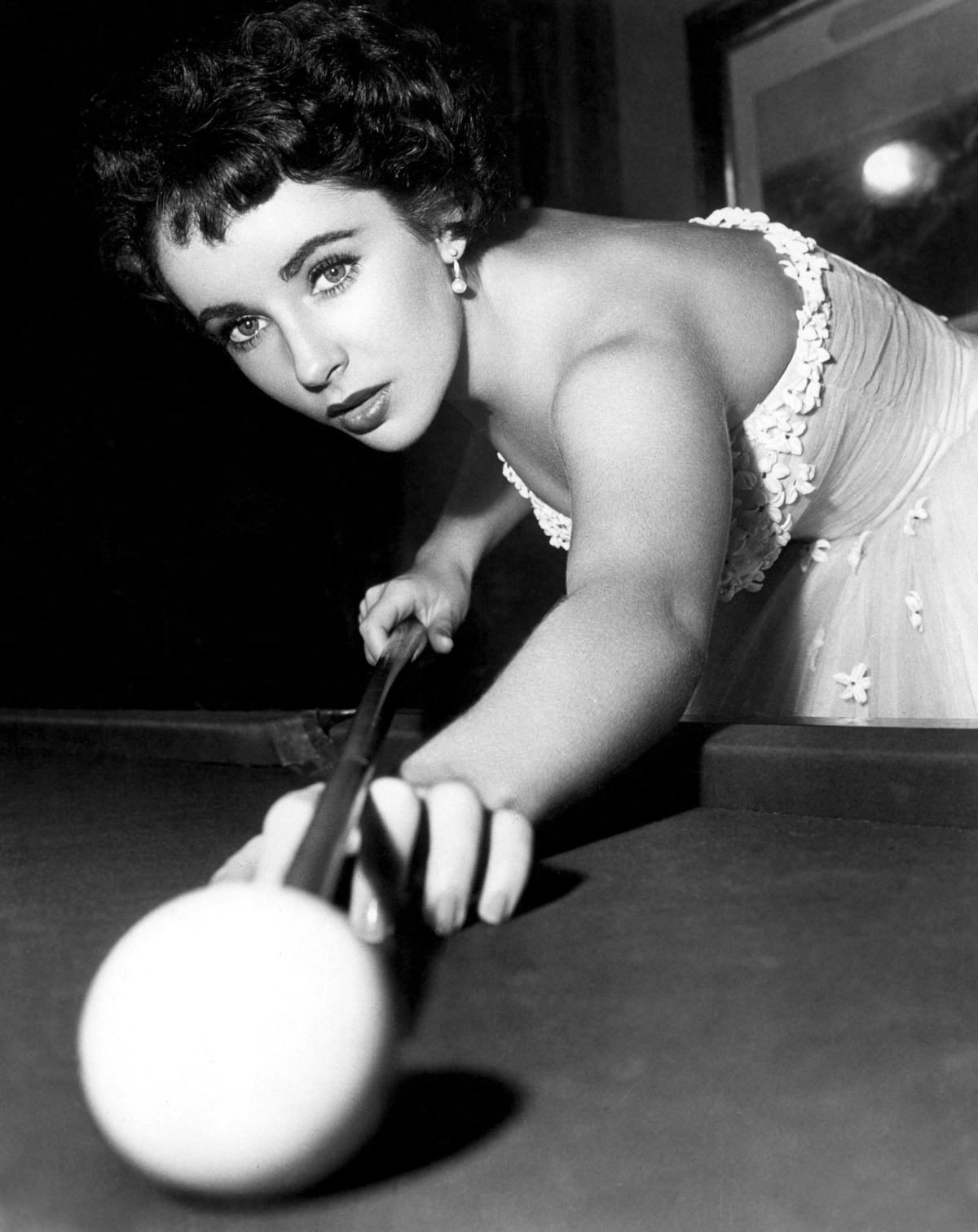
George Stevens hadn’t seen any of Elizabeth’s work before casting her in A Place in the Sun. Stevens said: “The part [of Angela Vickers] calls for not so much a real girl, as the girl on the candy-box cover, the beautiful girl in the yellow Cadillac convertible that every American boy sometime or other thinks he can marry.” He believed that Elizabeth could embody that ideal.
In Stevens, Elizabeth had a director who was different from the type she was used to at MGM. “He didn’t make me feel like a puppet,” she said. “He was an insinuating director. He gave indications of what he wanted but didn’t tell you specifically what to do or how to move. He would just say, ‘No, stop—that’s not quite right,’ and make you get it from your insides and do it again until it was the way he wanted it.” “She was seventeen, and she had been an actress all her life,” Stevens said. “The only thing was to prod her a bit into realizing her dramatic potential.”
Watching the rushes of the “Tell Mama” scene, Elizabeth, as Stevens hoped, zeroed in on the maternal quality of Angela’s relationship to George Eastman, and carried that through her performance. Stevens also encouraged Elizabeth to modulate her voice as the narrative progresses. He would also employ certain tactics to aid his actors. During rehearsals, he would play the score Franz Waxman had composed for the film to evoke the emotion he wanted his actors to convey. Toward the end of the film, he had Elizabeth wear shoes three sizes too small so the anguish her character was supposed to feel would be written on her face.
Monty Clift: “Practically My Dearest Friend”
Elizabeth also had a keen mentor in co-star Montgomery Clift. In the 1960s, she reflected on the enduring impact that Monty, whom she described as “practically my dearest friend,” had on her when they met during A Place in the Sun:
“...that day in the director’s office I had the full scale of teen-age palpitations. I thought he was the most gorgeous thing in the world and easily one of the best actors. But in a pair of jeans, slouched in a chair, he was hardly the austere, mysterious, affected, Method Studio actor I was expecting. And he wasn’t a bit snide about acting with a ‘cheap movie star.’
“I remember thinking, Here I am, working with Montgomery Clift, a gen-u-ine stage actor. Naturally I didn’t know what Method meant, but it sounded serious. So I thought, I’m going to be serious too, by God! He had a coach and I didn’t understand that because I had never even had acting lessons, much less a coach. Then the little ego began working away and I began thinking, Well, Method! They evidently sort of work themselves into a thing by transplanting themselves out of reality and making the fiction reality. And I watched Monty, I watched how much time he spent on concentration—which has since become the key to my kind of acting, if you can call it acting.
“Monty is the most emotional actor I have ever worked with. And it is contagious. When he would start to shake, I would start to shake. Only two actors I know, Monty and Richard [Burton], give to the degree that it’s almost a physical thing, like an umbilical cord, an electricity that goes back and forth.”
“The highlight of my teens was getting to know Montgomery Clift in A Place in the Sun,” she said in 1992. “Acting had been a game to me. He taught me acting was more than just performing on camera. Monty showed me it was an art form.” Elizabeth rose to the challenge. “It was the first time I ever considered acting,” she wrote. Monty coached Elizabeth and encouraged her to tap into Angela Vickers’s motivation and psychology. “Whatever you do, Elizabeth, begin at the beginning and let the character unfold itself within you,” he told her. “Keep thinking this girl—and soon she will grow to full stature before the camera.”
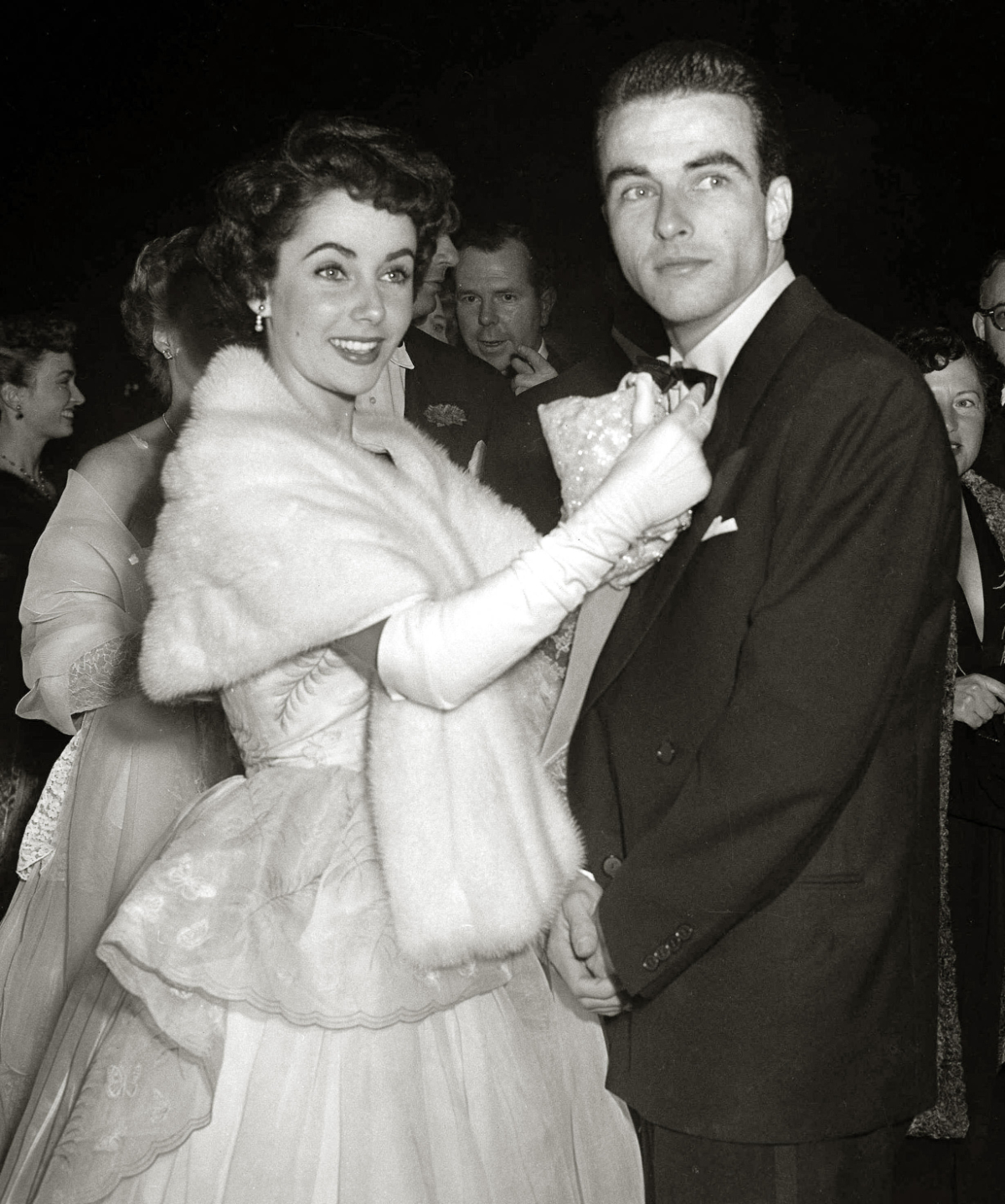
In the middle of filming A Place in the Sun, Elizabeth accompanied Monty to the premiere of his latest film, The Heiress (1949), co-starring Olivia de Havilland. Although the appearance was ostensibly for publicity purposes, a true friendship was already blossoming behind the camera, one that would endure for the rest of Clift’s life. “Monty was so funny, and he just put me at ease,” Elizabeth recalled. “That’s when I discovered we had a similar sense of humor, which was also slightly perverse. We liked each other!”
They went on to make two more films together: Raintree County (1957) and Suddenly, Last Summer (1959). There was to have been a fourth pairing, Reflections in a Golden Eye (1967), but Clift died before filming began.
Reflecting on Clift’s unique gift as an actor, Elizabeth said: “Of all the actors I’ve worked with or watched, Monty became his character, because he was passionate about bringing reality and absolute truth to his characters. Truth was everything to him.”
Elizabeth also formed another significant and enduring friendship during the making of A Place in the Sun: with legendary Paramount costume designer Edith Head. The two went on to work together on Elephant Walk (1954) and Ash Wednesday (1973), and Head came to the rescue by redesigning some of Elizabeth’s costumes for the 1976 film The Blue Bird. Head also created the iconic lavender gown Elizabeth wore to the 1970 Academy Awards. Elizabeth came to regard Head as a second mother, and was a frequent house guest at the designer’s Coldwater Canyon home. A plaque at the bottom of the stairwell of the Spanish-style home read: ELIZABETH TAYLOR SLEEPS HERE. Head bequeathed Elizabeth her necklace made of antique ivory and gold Victorian opera tokens, a reminder of a treasured friendship.
When Elizabeth arrived in Lake Tahoe for location filming in October 1949, the crew had to hose off the snow and light smudge pots to keep those in front of and behind the camera warm. Stevens, protected from the cold in a coat, hat, and boots, had Elizabeth do take after take “splashing” around in the water in a bathing suit until he got what he wanted.
Elizabeth’s co-star, Shelley Winters, asked George Stevens rhetorically whether Elizabeth needed to look so beautiful in the film. “I was kidding, but I wasn’t,” Winters explained. “I mean, with that beautiful black curly hair, enormous violet eyes, tiny waist, and gorgeous bosom. ... Besides that, she kept driving an enormous white convertible Cadillac through the picture.” Winters later revealed that she was so mesmerized by the sight of Elizabeth in that vehicle that she herself would go on to drive a series of white Cadillacs.