Studio: Metro-Goldwyn-Mayer (MGM)
Running time: 125 minutes
National Velvet (1944)
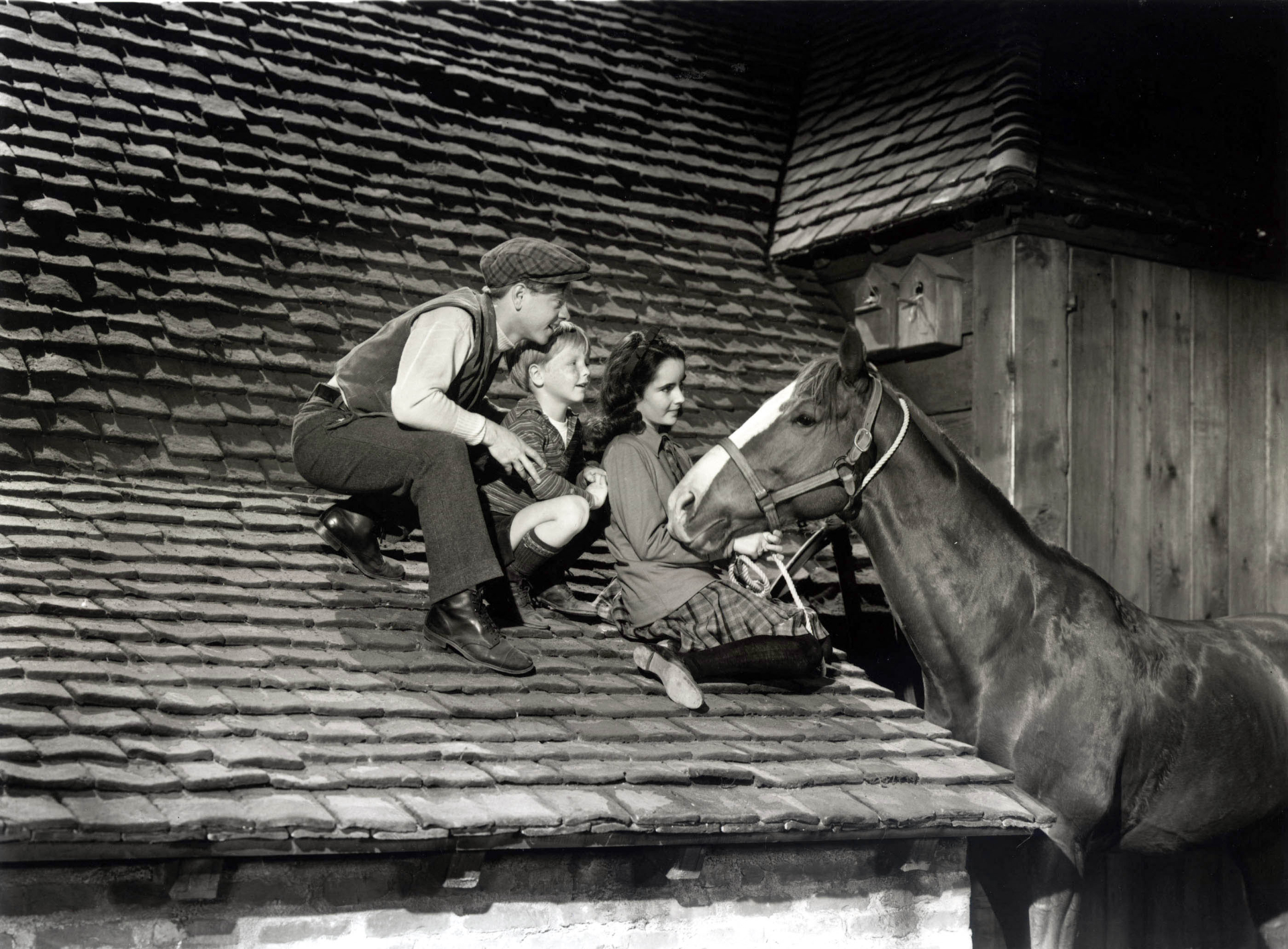
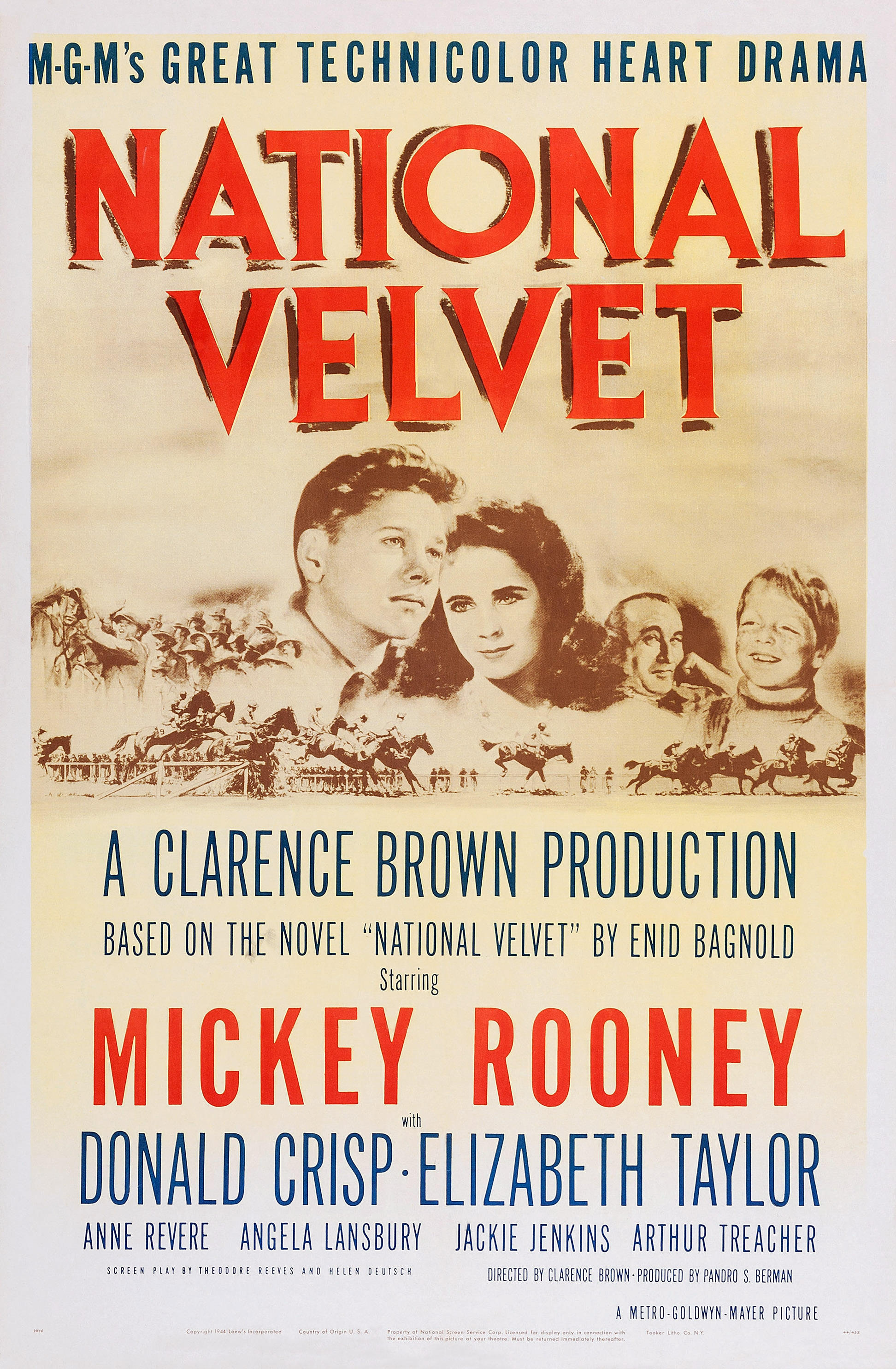
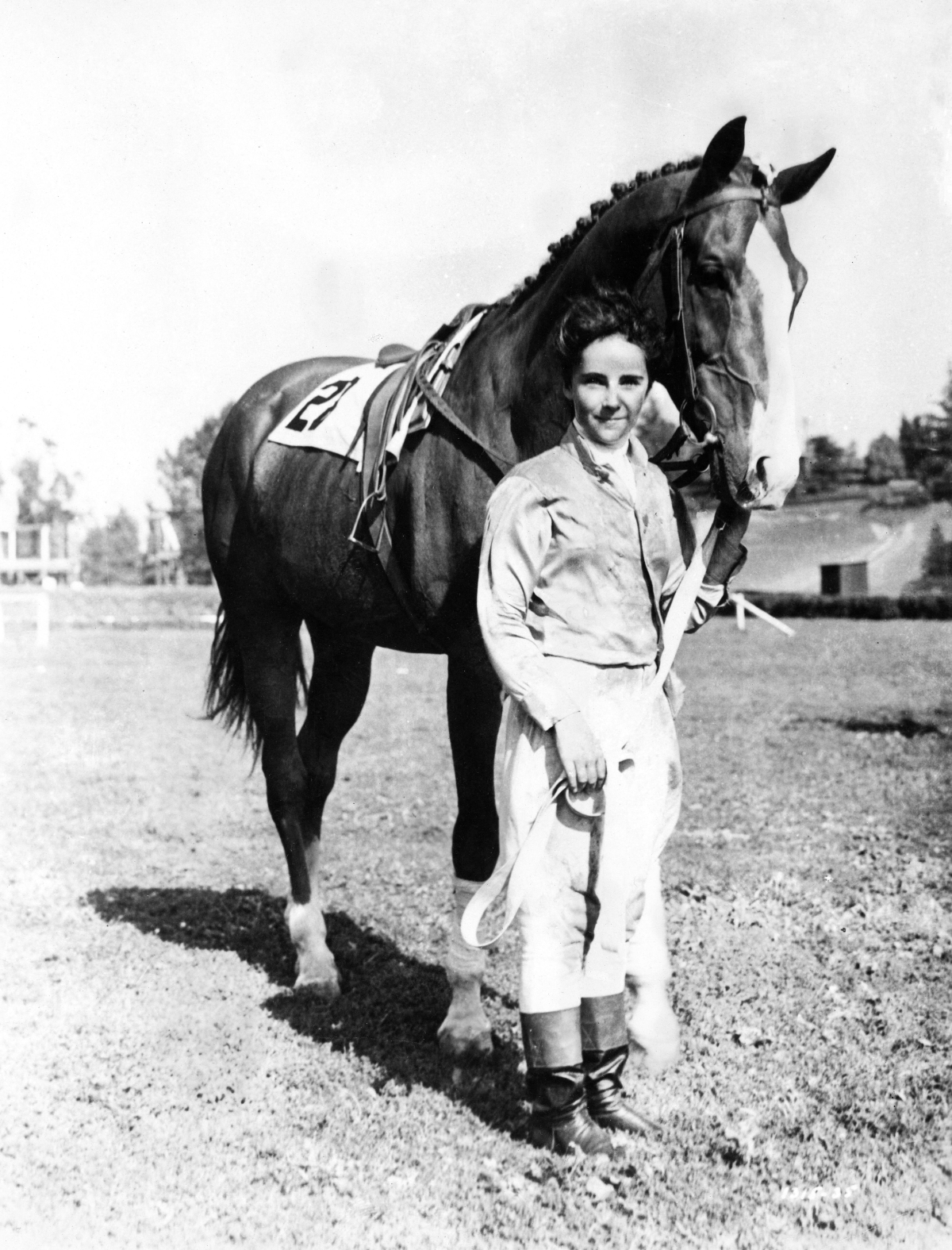
“As long as young hearts endure, so will National Velvet and movies like it. In her star-making role, Elizabeth Taylor plays Velvet Brown, a wide-eyed adolescent who, assisted by her jockey pal (Mickey Rooney), trains [The] Pie, a horse she won in a raffle, for the Grand National Steeplechase. Of course, no girl can ride in the National, can she? Yet Velvet, posing as a boy, assuredly does. Superbly directed by Clarence Brown, this exciting winner of two Academy Awards (one to Anne Revere for her performance as Velvet’s mother) costars a young Angela Lansbury and veteran Donald Crisp. The film has an off-screen postscript as winning as the on-screen finale: The studio gave [The] Pie to Taylor after filming wrapped.” [From the Blu-ray]
Cast
Mi Taylor: Mickey Rooney
Mr. Brown: Donald Crisp
Velvet Brown: Elizabeth Taylor
Mrs. Brown: Anne Revere
Edwina Brown: Angela Lansbury
Malvolia Brown: Juanita Quigley
Donald Brown: Jackie “Butch” Jenkins
Farmer Ede: Reginald Owen
Ted: Terry Kilburn
Tim: Alec Craig
Mr. Taski: Eugene Loring
Miss Sims: Norma Varden
Mr. Hallam: Arthur Shields
Mr. Greenford: Dennis Hoey
Entry Officer: Aubrey Mather
Stewart: Frederic Worlock
Man with Umbrella: Arthur Treacher
Van Driver: Harry Allen
Constable: Billy Bevan
Townsman: Barry Macollum
Entry Clerk: Matthew Boulton
First Pressman: Leyland Hodgson
Second Pressman: Leonard Carey
Cockney: Colin Campbell
Englishman: Frank Benson
Jockey: Wally Cassell
Valet: Alec Harford
Reporter: William Austin
Cameraman: Gerald Oliver Smith
First Villager: Olaf Hytten
Second Villager: George Kirby
Woman: Moyna MacGill
American: Donald Curtis
Schoolboy: Howard Taylor
Crew
Director: Clarence Brown
Producer: Pandro S. Berman
Screenwriters: Theodore Reeves and Helen Deutsch
Based on the Novel by: Enid Bagnold
Cinematographer: Leonard Smith
Art Directors: Cedrics Gibbons and Urie McCleary
Set Decorators: Edwin B. Willis and Mildred Griffiths
Costumes: Irene
Men’s Wardrobe: Valles
Special Effects: Warren Newcombe
Musical Score: Herbert Stothart
Editor: Robert J. Kern
Did You Know?
In 1935, RKO producer Pandro Berman was eager to acquire the screen rights to Enid Bagnold’s wildly successful novel National Velvet. The story of a butcher’s daughter who, masquerading as a male jockey, rides her plow horse to victory in England’s Grand National, the world’s greatest horse race, was, the producer thought, the ideal vehicle for Katharine Hepburn. He was outbid, however, by Paramount. Just two years later, Paramount, which had difficulty casting the film, sold the rights to MGM. There, Leslie Ruth, daughter of Leslie Howard, was tested as a possible Velvet, and Spencer Tracy was considered for a lead role. But with the onset of World War II, plans for the film were put on the back burner.
Fate, however, would have it that, in 1941, Berman, having left RKO for MGM, would dust off the project he had hoped to make six years earlier, and the search for Velvet began anew. As England’s Children and Young Persons Act refused to allow young girls to work abroad, the hunt was restricted to MGM’s side of the Atlantic. Scouts were sent to Canada, where many English girls were living during the war, and also to search among the current crop of Broadway actresses. The ideal Velvet, however, would soon be right under their noses.
In 1943, Elizabeth Taylor was under contract to MGM. National Velvet was her favourite book, and she and her mother met with Berman to sell him on the idea of her playing the title role. (The film’s director, Clarence Brown, who had worked with Elizabeth that year in The White Cliffs of Dover, had already suggested her for the part.) The eleven-year-old actress, who had been riding since the age of three, identified passionately with its heroine. She was Velvet, she told the producer. Berman, however, felt that Elizabeth was too small to be believable in the role. He eventually relented. The film would be delayed from September 1943 until January of the following year, giving Elizabeth time to grow into the role. Displaying all the willful determination of the book’s title character, Elizabeth continued to diligently practice her riding. She followed a strict diet and exercise regime, eventually adding three inches to her height before the cameras began to roll.
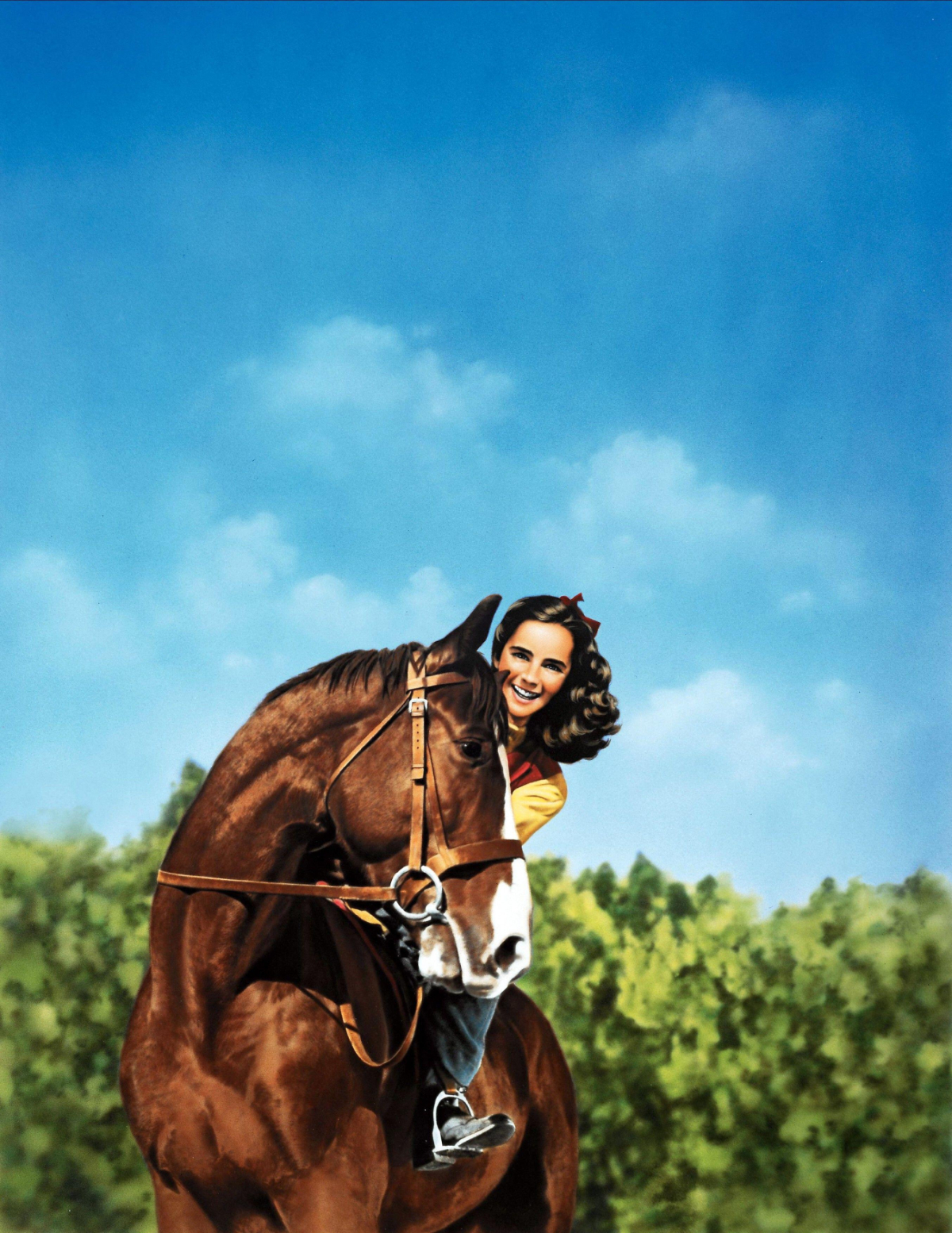
Although Elizabeth had been riding for much of her young life, she would spend an hour each morning practicing on King Charles, who would be her equine co-star in National Velvet, at the Riviera Country Club in Pacific Palisades. She said King Charles was temperamental, and would later share that she was one of the few who could actually ride him:
“He was a splendid animal, grand-sired by Man o’ War, and I could jump him six feet bareback. But he was wild. He took a hunk out of the shoulder of the man who tried to train him to play dead for the film. Except for the jockey who did some of the jumps in the National, I was about the only person who could ride him—and bareback with just a rope around his neck. That horse used to follow me around the back lot like a puppy dog. He really was a lunatic. Just for the hell of it he once jumped over an automobile.”
Elizabeth had convinced her parents to inquire whether she could buy King Charles from the studio. (He was, she wrote in Nibbles and Me, “The one thing in the world I wanted, and which I had always wanted from the day I first saw him”). After filming wrapped, MGM presented Elizabeth with King Charles for her thirteenth birthday, an event which she later described as “one of the moments of my life.”
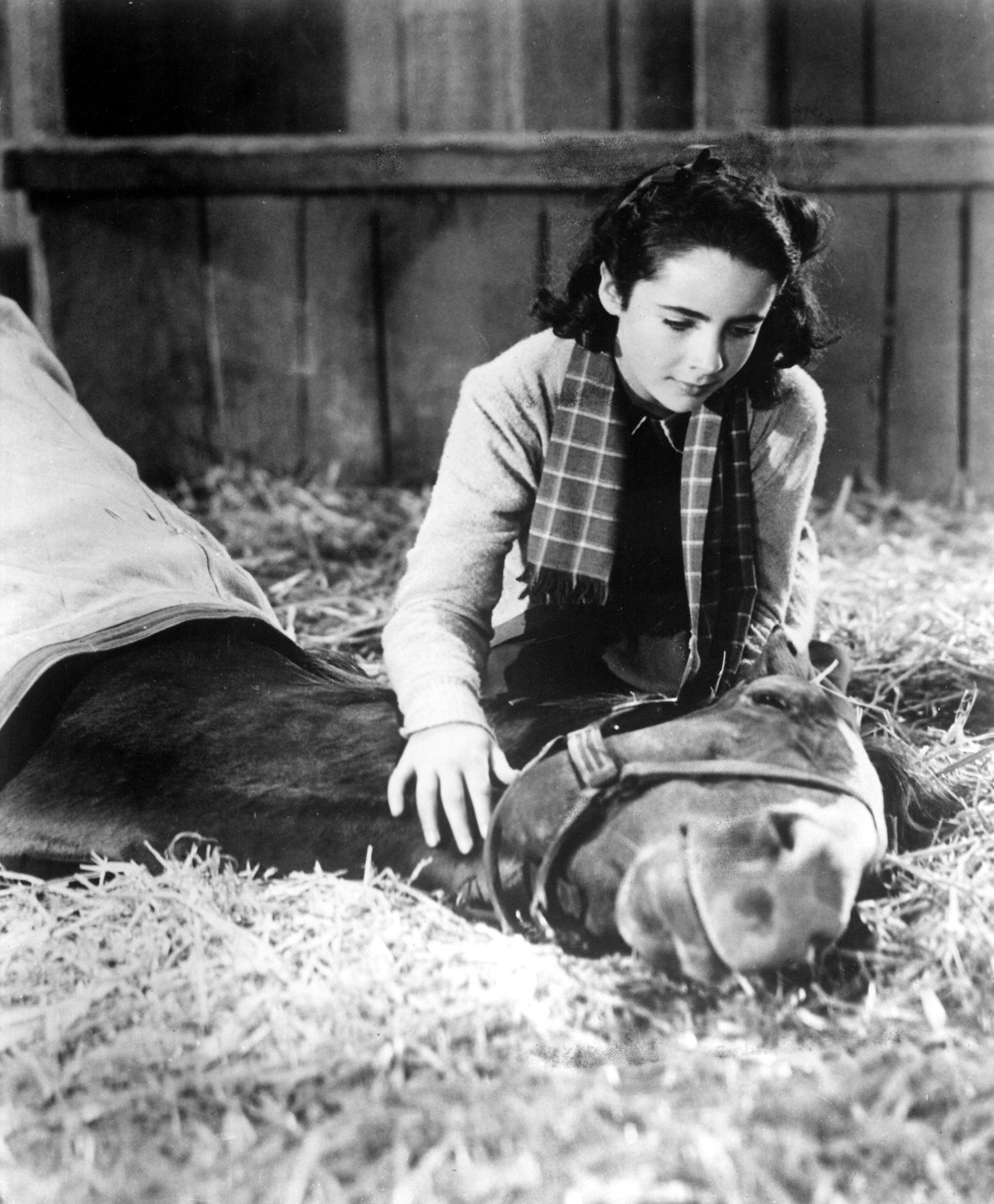
One scene in the film, when it’s feared that The Pi might not live, required Elizabeth to cry on screen for the first time. To help the tears come, her co-star, Mickey Rooney, suggested that “‘you should think that your father is dying and your mother has to wash clothes for a living, and your little brother is out selling newspapers on the street and he doesn’t have shoes and he’s cold and shivering, and your little dog was run over.’ It was like Chekov [sic] gone nuts and it was meant to make me start to cry.” It had the opposite effect of what Mickey intended, and Elizabeth got the giggles.
“When I did the scene, instead of imagining my father drunk and dying and my mother doing laundry in a snow stream, all I thought about was the horse being very sick and that I was the little girl who owned him. And the tears came. But how generous of Mickey to try to help me.”
National Velvet was a family affair: Elizabeth’s brother, Howard, is one of the schoolboys taunting Velvet and her classmates through an open window as they sing on their final day of school before breaking for the summer holidays. Angela Lansbury’s mother, Moyna MacGill, had a walk-on part. And although Roddy McDowall isn’t in the film, his sister, Virginia, was also an uncredited extra.
A teenage Elizabeth wrote in Nibbles and Me that, during the making of National Velvet, “Mr. Brown, the director, was very cross one day because someone put a gold star on my dressing room and ‘Miss’ Taylor on the door. He made them take it away and put ELIZABETH on instead. He was afraid I would be hurt about it, and he explained that he was afraid it might go to my head—or wherever it does go that makes people change—and he wanted me always to stay the same.”
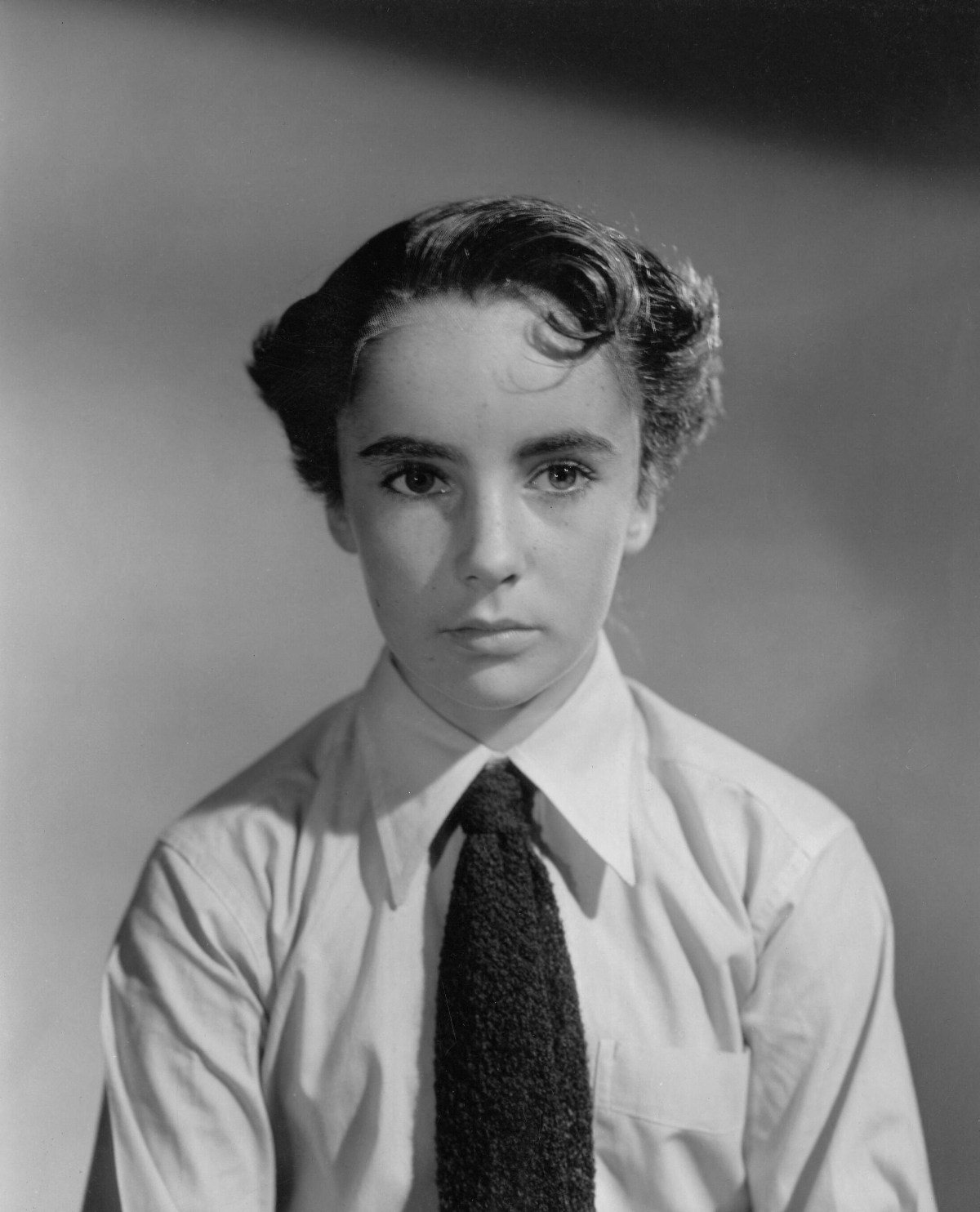
Both the producer and director insisted that Elizabeth’s actual hair be shorn for the part of the film onwards where, to be believable as a girl masquerading as a male jockey, Velvet’s hair is cropped short. There are conflicting reports about what happened next. Berman said that Elizabeth’s father, Francis, vetoed the idea and that was that; she would wear a wig. Sydney Guilaroff, in his memoir, claimed that he consoled Elizabeth, who was in floods of tears, by crafting a wig for her to wear. “On the day the scene was to be shot,” wrote Guilaroff, “I led Elizabeth and her mother, Sara, onto the set and swore them to secrecy. I then walked over to Clarence [Brown] and pointed to Elizabeth.” In Guilaroff’s telling, Brown was completely taken in by the wig, and the gesture endeared Elizabeth to the legendary MGM hairstylist for the rest of his life.