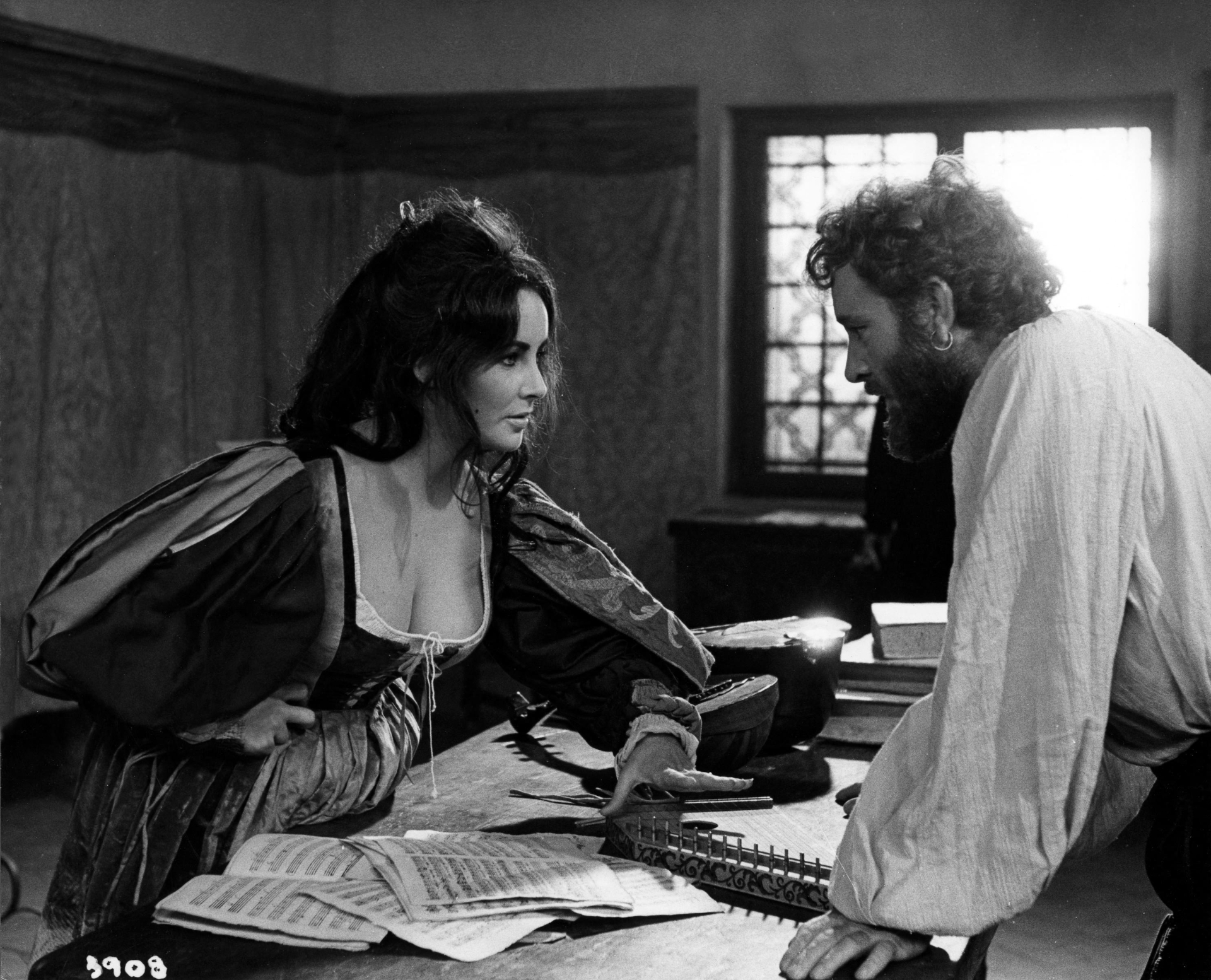

Studio: Columbia
Running time: 122 minutes
The Taming of the Shrew (1967)
“Elizabeth Taylor and Richard Burton sparkle and amuse as Katharina and Petruchio in William Shakespeare’s comic look at male chauvinism and women’s lib in the 16th century. Petruchio, a poverty-stricken gentleman from Verona, journeys to Padua in search of a wealthy wife. There he encounters the fiery Katharina, a self-willed shrew who leads Petruchio on a merry chase before he successfully circumvents her attempts to avoid marriage. Their honeymoon becomes a humorous battle of wit and insult with Kate as determined to maintain her independence as Petruchio is to ‘tame’ her. When the embattled couple returns to Padua, Kate helps Petruchio win a wager that his is the most obedient of wives. But in reality, the shrewish Kate has found a more effective way to dominate her mate.” [From the DVD]
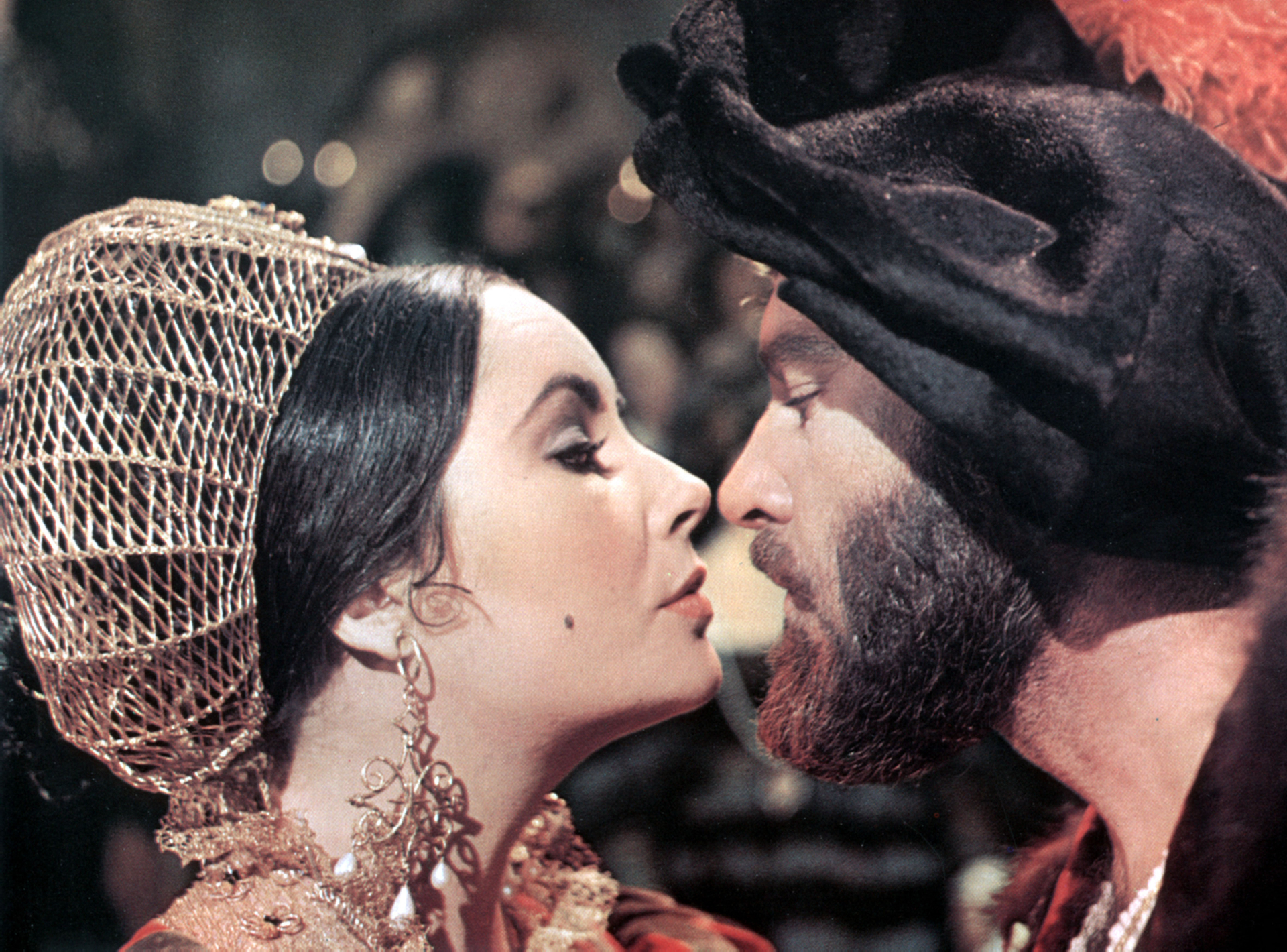

Cast
Katharina: Elizabeth Taylor
Petruchio: Richard Burton
Grumio: Cyril Cusack
Baptista: Michael Hordern
Lucentio: Michael York
Bianca: Natasha Pyne
Hortensio: Victor Spinetti
Tranio: Alfred Lynch
Gremio: Alan Webb
Pedant: Vernon Dobtcheff
Biondello: Roy Holder
Priest: Giancarlo Cobelli
Curtis: Gianni Magni
Nathanial: Alberto Bonucci
Gregory: Lino Capolicchio
Philip: Roberto Antonelli
Vincentio: Mark Dignam
Haberdasher: Anthony Garner
Tailor: Ken Parry
Widow: Bice Valori
Crew
Director: Franco Zeffirelli
Executive Producer: Richard McWhorter
Producers: Richard Burton, Elizabeth Taylor, and Franco Zeffirelli
Screenwriters: Paul Dehn, Suso Cecchi D’Amico, and Franco Zeffirelli
Based on the Play by: William Shakespeare
Cinematographers: Oswald Morris and Luciano Trasatti
Production Designer: John De Cuir
Art Directors: Giuseppe Mariani and Elven Webb
Set Decorators: Dario Simoni and Carlo Gervasi
Special Effects: Augie Lohman
Musical Score: Nino Rota
Editors: Peter Taylor and Carlo Fabianelli
Costumes: Irene Sharaff (Elizabeth Taylor and Richard Burton) and Danilo Donatti
Did You Know?
As they had with their previous film, Who’s Afraid of Virginia Woolf? (1966), Elizabeth and Richard would once again put their trust in an unproven film director. “At the time, I had a reputation as a theater and opera director but had yet to make a major film,” Zeffirelli explained. “Without the Taylor/Burton link, my project would never get off the ground.” Richard stepped in to direct the film’s denouement when Zeffirelli was absent with a commitment at The Metropolitan Opera in New York.
In The Taming of the Shrew, Elizabeth tackled Shakespeare onscreen for the first time, alongside some of the world’s most revered Shakespearean actors, including Richard Burton, Cyril Cusack, Victor Spinetti, Michael York, and Michael Hordern. She later shared her intimidation at working with a company of seasoned Shakespearean actors. “That was shattering because I’d never done Shakespeare before and here’s Muggins, from Hollywood, you know, who had done Cleopatra, which was like a mockery to those people.” “I said, ‘Richard, I’m scared witless. I know nothing about it; you’ve got to help me because I'm absolutely panic-struck.’ He said, ‘Listen, Mabel. You did alright in Virginia Woolf ... Just consider it exactly the same, and you do it on your own. And if it isn’t your own, then it won’t mean anything.”
She triumphed, of course. According to Zeffirelli: “Elizabeth was very shy to play Shakespeare to begin with, but she brought a marvelous devotion. On the first day, I remember, she was like a girl coming to her marriage too young; she had extreme concern and humility. That day, she was really enchanting...I consider that Elizabeth, with no Shakespearean background, gave the more interesting performance because she invented the part from scratch.”
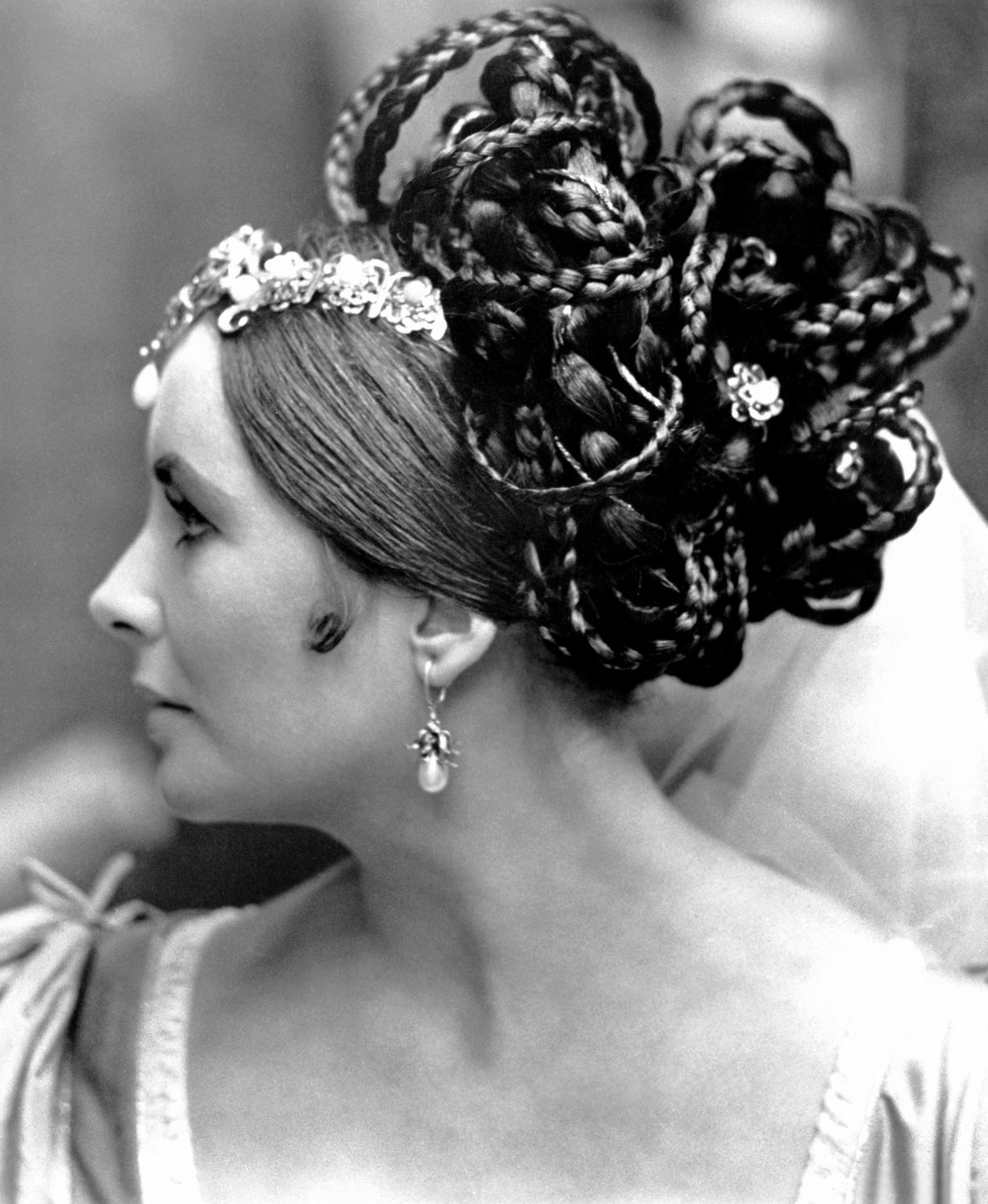
Elizabeth learned that her dear friend and three-time former co-star, Montgomery Clift, had tragically died of a heart attack at age forty-five while she was making The Taming of the Shrew in Rome. “We were filming in Italy when Monty was buried, and Liz’s professionalism would not allow her to break the shoot,” recalled Zeffirelli. “By the cruelest of ironies, the day of the funeral was ordained for one of the lightest, silliest comedy scenes in the entire story. One-shot Liz did the whole thing with unsurpassed humor. Only when filming was over did she allow Richard to hold her in his arms and comfort her as she wept for the handsome costar of her youth.”
This film marked the end of a several-year collaboration between Elizabeth and costume designer Irene Sharaff, which began with Cleopatra (1963). Sharaff also designed Elizabeth’s costumes for The Sandpiper (1965) and Who’s Afraid of Virginia Woolf? (1966), as well as the wedding dress Elizabeth wore when she married Richard Burton in Montréal in 1964.

Elizabeth’s sons, Michael and Christopher Wilding, make cameos in the film.
The Premieres
Elizabeth celebrated her 35th birthday on February 27, 1967, at the Royal Command Performance premiere screening of The Taming of the Shrew. The screening was held at London’s Odeon Theatre in the presence of Her Royal Highness Princess Margaret. Elizabeth, glittering in her Bulgari diamonds and emeralds, wore a Chanel ballgown with a silver foil bodice and a sheer white silk chiffon hooded cape.
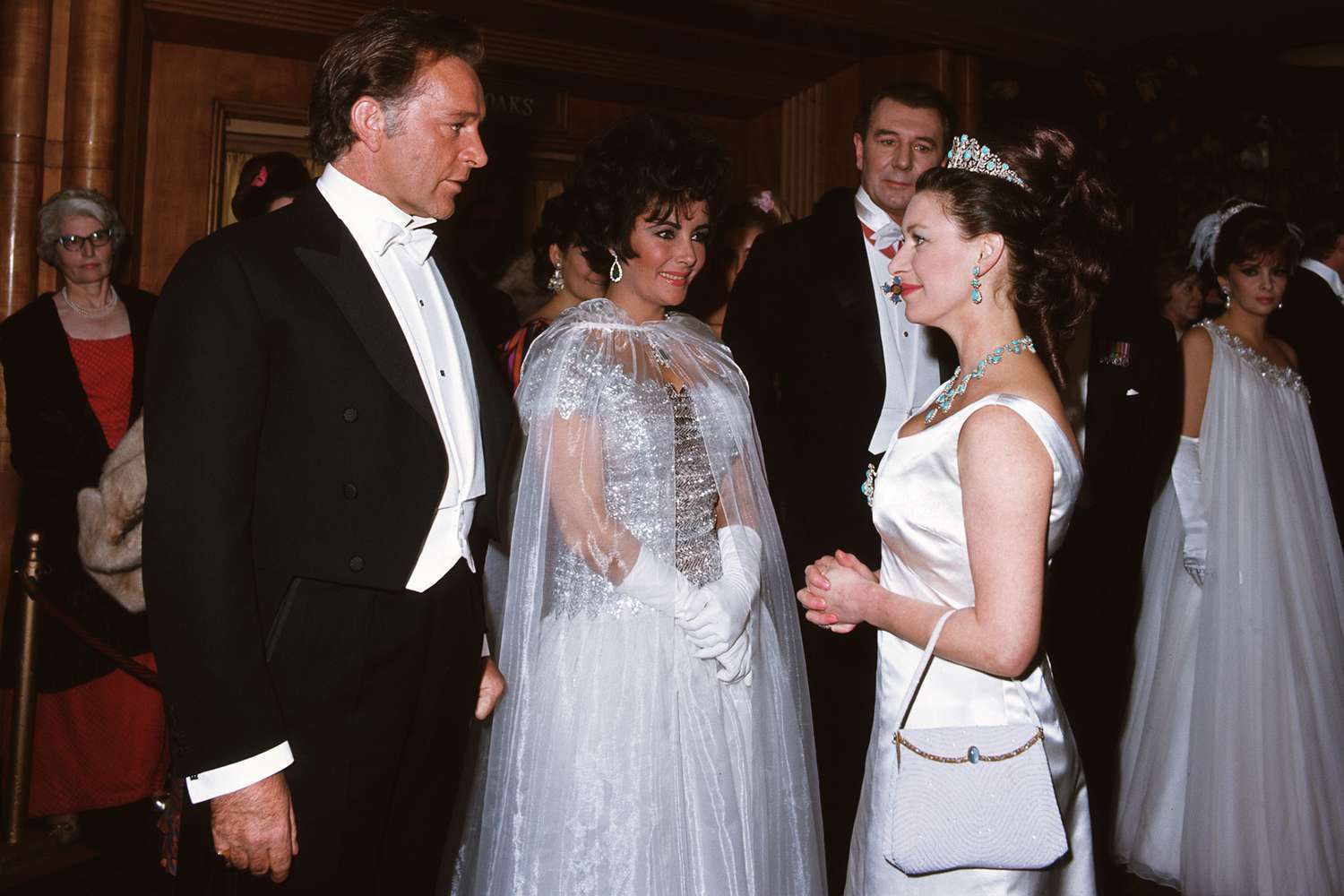
Later that year, in September, the Burtons also attended the Paris premiere of the film at the opulent Palais Garnier. The evening was a total triumph, which Richard recorded in his diary:
“It was an outstanding success and the Press coverage was enormous. The film is widely praised and apart from a carp or two in the Herald Tribune and one French paper – not very important – the critical reaction was joyous. E wore a diadem specially created for her by the De Beers company of Van Cleef and Arpel, designed by Alexandre [de Paris], which cost $1,200,000. With her other jewellery she wore a total of roughly $1,500,000. When we left the hotel, surrounded by 8 guards, all the hotel guests were forming an aisle to the street. There were many photographers but at the Opera it was a madhouse. Despite the presence of 5 ministers of the Government, one of whom gave us a message purporting to come from De Gaulle himself, and numerous luminaries of the cinema, stage, and society and the arts E was unquestionably the Queen of the evening.”