Love Letters (2007)
BY A.R. GURNEY
DIRECTED BY JOHN TILLINGER
World AIDS Day Benefit Performance
1 December 2007
Paramount Studios, Hollywood, California
“Tracing the lifelong correspondence of the staid, dutiful lawyer Andrew Makepeace Ladd III and the lively, unstable artist Melissa Gardner, the story of their bittersweet relationship gradually unfolds from what is written—and what is left unsaid—in their letters. A smash hit both off and on Broadway, Love Letters captures Andy and Melissa with a precision of detail and depth of feeling that only Gurney can command.” [From the Plume Books edition of the play]
Cast
Melissa Gardner … DAME ELIZABETH TAYLOR
Andrew Makepeace Ladd III … JAMES EARL JONES
Crew
Producers … Konrad Leh and Miles Robinson
Production Supervisor … Kelley Kirkpatrick
Lighting Designer … Brian Gale
Stage Manager … Grayson Meritt
Dame Elizabeth’s Hair … José Eber
Dame Elizabeth’s Makeup … Francesca Tolot
Grooming for Mr. Jones … Helen Jeffers
About the Production
On December 1, 2007, World AIDS Day, Dame Elizabeth Taylor, then age seventy-five, made a triumphant return to the stage for the first time in nearly a quarter of a century. What could have lured her back after such a prolonged absence? Only the cause closest to her heart: the fight against AIDS.
“When I last acted on stage, I could not imagine ever doing so again,” she admitted. “I also could not imagine a world of ignorance, denial and continuing death.”
Liz Smith announced in her column earlier that year that, in hopes of raising a million dollars for The Elizabeth Taylor AIDS Foundation, Elizabeth was set to perform in a one-night-only benefit performance of A.R. Gurney’s poignant play, Love Letters.
The play is unique in that it “needs no theatre, no lengthy rehearsal, no special set, no memorization of lines, and no commitment from its two actors beyond the night of performance,” Gurney explains in the Author’s Note to the published play. “It is designed simply to be read aloud by an actor and an actress of roughly the same age, sitting side by side at a table, in front of a group of people of any size.”
Love Letters charts the decades-long friendship between the “staid, dutiful lawyer” Andy and Melissa, a “lively, unstable artist”, through the letters the two exchange, beginning when they are just eight years old. Elizabeth was to star as Melissa opposite her old friend, the legendary James Earl Jones, as Andy. The two had, of course, shared the screen years earlier in Peter Glenville’s adaptation of Graham Greene’s The Comedians (1967) and were both recipients of the Kennedy Center Honors in 2002.
A One Night Dispensation
But before this historic, once-in-a-lifetime theatrical event could take place, there was a major hurdle to overcome. The Writers Guild of America was on strike, and one of the locations they were picketing was the fabled Paramount Studios on Melrose Avenue in the heart of Hollywood, where Love Letters was to be staged.
Elizabeth felt tremendous empathy for WGA’s plight and didn’t want her guests to cross a picket line. She made a telephone call to Patric Verrone, president of the western chapter of the guild, to request a “one night dispensation”. The Writers Guild of America happily agreed. Verrone said in a statement that “this worthy event is happening solely through the efforts and underwriting of Dame Elizabeth Taylor, who is not only a longtime member of the Screen Actors Guild, but an outspoken supporter of the Writers Guild”.
Elizabeth was greatly appreciative. “The Writers Guild of America has shown great humanity, empathy and courage by allowing our little evening to move forward,” she said.
A Consummation Devoutly to Be Celebrated
“I feel an extra shiver of hubris over tonight’s cast,” playwright A.R. Gurney wrote in a letter that was included in the evening’s program. “I’ve already had the special pleasure of seeing Mr. Jones nail his part, but to see Elizabeth Taylor bring her beauty and talent to a role I’ve often dreamed of her playing is a consummation devoutly to be celebrated.”
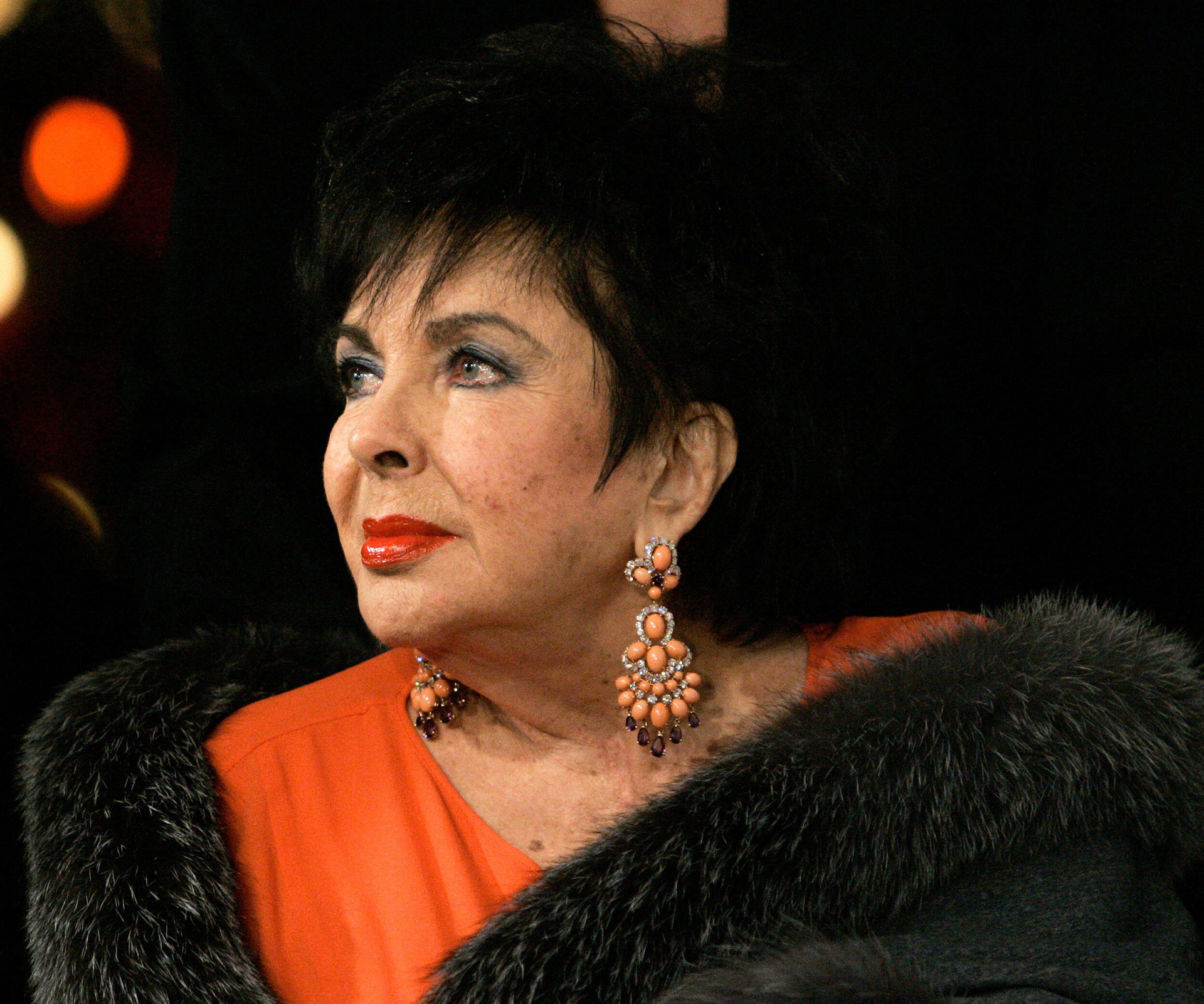
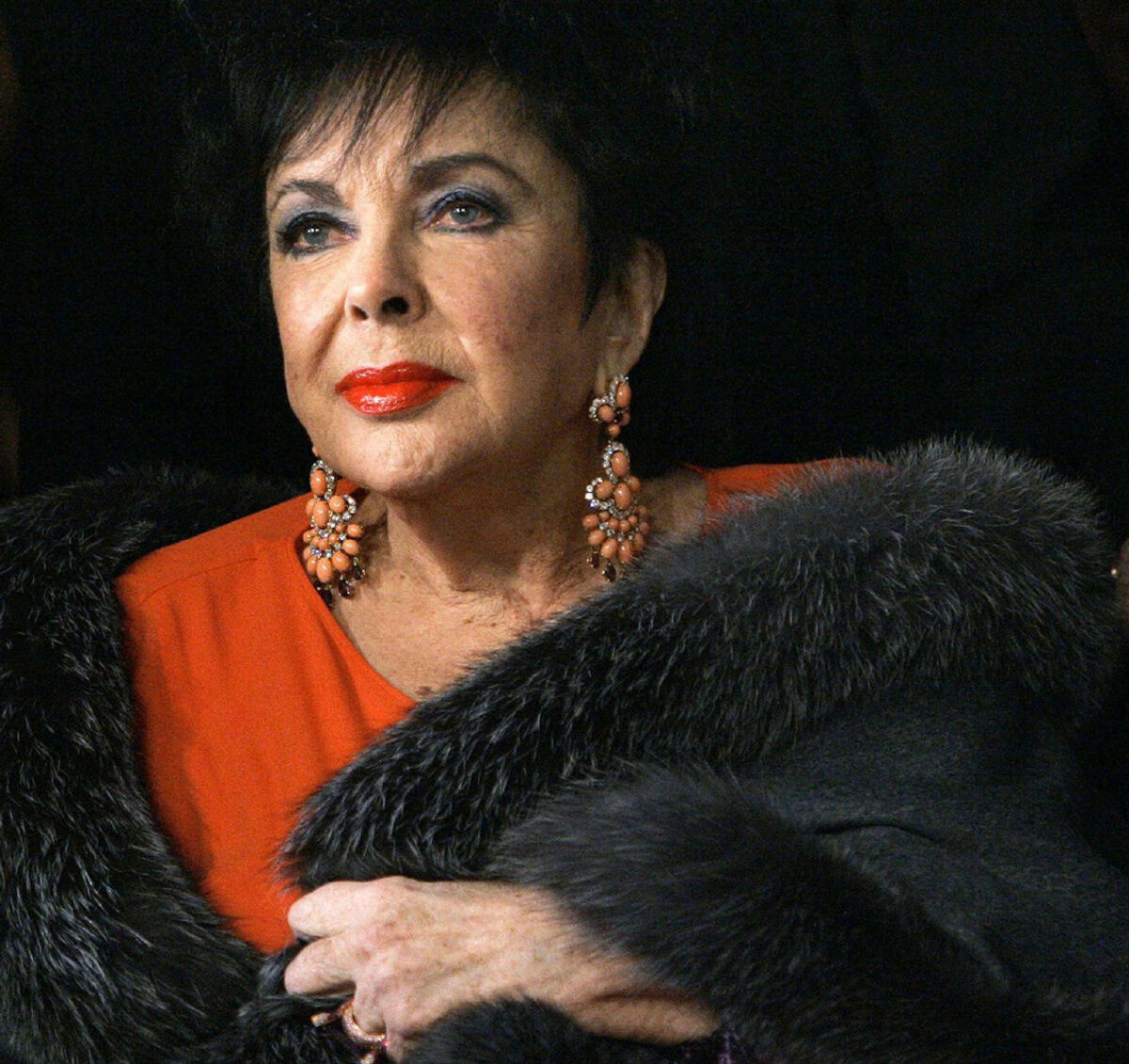
Elizabeth arrived at the Paramount Theatre on the Paramount Studios lot, where she had made A Place in the Sun (1951) decades earlier, in an orange silk Michael Kors caftan, swathed in fur, and glittering in coral, amethyst, and diamond jewelry by Van Cleef & Arpels, treasured gifts from Richard Burton.
Anti-gay protesters loudly picketed Elizabeth’s fundraiser at the gates of Paramount Studios—a reminder that the stigma surrounding HIV/AIDS is far from vanquished. In a statement published in Liz Smith’s column just days after the performance, Elizabeth said: “Our traditions of free speech are to be revered and protected, and that extends even when a group uses this freedom to monger hatred of innocent people… this reminder that such ignorance and hatred of our fellow human beings forces us to redouble our efforts to address HIV/AIDS. Please pray for hearts which are filled with hatred… when the greatest need is God’s love.”
An Artistic Triumph
Among the 500 attendees were California’s First Lady, Maria Shriver; Holland Taylor, who appeared as Melissa Gardner in the very first production of Love Letters; Elizabeth’s friend and business partner Kathy Ireland; and many members of Elizabeth’s family. (I was also fortunate enough to attend, and was truly honoured to be seated in the front row with Elizabeth’s family.) In addition to funds raised through ticket sales, priced at $2,500 each, David Geffen, Paul Newman, Christie’s auction house, Elton John, Hugh Hefner, and Kathy Ireland also made substantial donations. The proceeds were divided equally between The Elizabeth Taylor Endowment Fund for the UCLA HIV/AIDS CARE Center and for the purchase of mobile medical units in sub-Saharan Africa.
The evening was not only a tremendous success in raising desperately needed money for AIDS, but was also an artistic triumph for its star. The play’s author, A.R. Gurney, who was in the audience, later revealed that Elizabeth suffered from nerves ahead of appearing on stage. “But she came out and did it, and as the play continued, she grew into the part in a most amazing way.”
She modulated her voice to convey Melissa’s journey from that of a pampered little girl to a woman of anguished desperation (there were shades of some of her finest performances on film, such as Gloria Wandrous, Catherine Holly, and Maggie the Cat). “Toward the conclusion, when her character breaks down mentally, Elizabeth made some daring choices,” Liz Smith’s column reported. “There was a palpable difference in her opening and closing ovations,” the columnist noted. “When she was wheeled onstage the crowd roared for her history and courage. At the end, they lauded an actress.”
Gurney agreed. “At the end the audience rose to its feet, and she, who had been in a wheelchair all evening, got up on her feet and applauded the audience. I’ve never seen that play work so well therapeutically before.”